


Attractions Expert Q&A: Anthony Esparza developed Dollywood’s master plan, including its first onsite hotel
Anthony Esparza began his career as Creative Development VP for Landmark Entertainment Group, where he worked on iconic attractions, restaurants, and tourist destinations like the Forum Shops at Caesars Palace and Hello Kitty Puroland in Japan.

Anthony Esparza’s career has included designing attractions and live entertainment as Design + Entertainment SVP at Paramount Parks, helping to develop the master plan for Dollywood – and designing Dollywood’s DreamMore Resort, the park’s first onsite hotel – as Guest Experiences SVP at Herschend Family Entertainment; creating fun innovative guest experiences as Chief of Guest Experiences for Carnival Cruise Line; and refocused the message and culture for SeaWorld, Busch Gardens, Aquatica, Discovery Cove, and Sesame Place parks as Chief Creative Officer for SeaWorld Parks.
What theme park souvenir might we be surprised to find on your shelf, and what’s its story?
It’s a souvenir that I won’t say I stole but rather acquired: the maquette we used to build part of Sanrio Puroland in Japan. It’s probably the most symbolic one on my desk, the little robot, Digit. This orange robot was under the guise of Mister Tech at this theater and was supposed to have all of man’s knowledge – kind of like Artificial Intelligence today. Little Digit conjured up all the data, along with a meet-and-greet with Leonardo da Vinci, Thomas Edison, Isaac Newton, and Albert Einstein. The message was teaching kids they could think on their own.

It was a great opportunity because I had no reason to be in charge of this $20 million attraction, and somehow, we got through it. The Art Director was Luc Mayrand (now Disney’s Senior Creative Director), and the Technical Director was Chris Conti (now Executive Consultant at Electrosonic). We were all just beginning, so when I look at that little robot, I think of the crazy memories of these roots from 30 or 35 years ago and the theme of Artificial Intelligence and this independent robot, which was kind of before its time. It’s a fun thing that I enjoy.
What theme park have you always wanted to visit but have never been to?
I haven’t been to Shanghai Disney yet. It’s been on my list, but I sort of left the mainstream of corporate theme parks just before that opened, and I’ve been running around doing all these other things, so I haven’t gotten there to check it out.
Was there a theme park or attraction that made you want to be in this industry, and how did it inspire you?
I would say it was Epcot. I had graduated from UCLA with a design degree and was trying to figure out what to do with it, so I bought a plane ticket – one of those TWA around-the-world tickets you could get for $2,000. This was pre-internet, so you had to have paper tickets. The rules of the ticket were that you had to go in one direction and couldn’t backtrack, so I charted out a path of every different place I could go moving forward, and my first stop was my girlfriend’s house (who became my wife, Brenda) in Salt Lake City. Then I went to Orlando to visit Epcot. I thought it would be fun to go around the world there and then check out the real stuff.

To me, it was just perfection as far as all the themes, and I remember it was so clean and organized, designed from top to bottom. At that time, there weren’t as many theme parks as there are now. Disneyland had evolved with a bunch of different attractions, but this park was all laid out so well and had so much space. It was big and had all the theming, the different countries and the music. I just thought, wow, how do I get to do this?
What was your favorite ride or attraction as a child, and why?
The one I have the most fond memories of is the Matterhorn. I grew up in Southern California, so I was one of the lucky ones whose parents would bring them to Disneyland once a year. As we were driving down the I-5 when I was little, the big game in our car was who could see the Matterhorn first.

My sister and I would look over the trees, and my dad and mom would always come up with a contest that whoever saw it first got a free ice cream or something. So it was that anticipation that created a great memory.
Was there a ride, attraction, or character that frightened you as a child?
I remember riding the pack mules at Disneyland. I was little, and it just felt like, at any moment, I would be flung off the mule or slide into some gully. I didn’t know.

If you look back at the pictures now, it seems so tame, and they’re just walking along some narrow trails, but I was this little kid hanging on to this real animal, and I had read stories that the mules didn’t always like walking on those paths and may not behave because they wanted to chew on the scenery or something. Or maybe the mules were just sick of walking that route over and over and wanted to run back to the barn. But they ended it in the Seventies when Big Thunder Mountain Railroad came in.
What was the oddest or coolest job you’ve had in your career?
The oddest was when I was an electronic stereo and TV repair nerd. I was a ham radio operator when I was young, so I knew electronics well. We lived in a small town, and there was a local repair shop. I just knocked on the door and said, “Hey, can I get a job doing something here? “ Before I knew it, I was taking TVs and stereos apart and screwing them back together. I figured out there was usually some way to switch out parts, and it was easy to do, so that was odd, but it was good because I got to know electronics and how to work with major brands like Panasonic and all the popular ones back then.
But the most fun one was in high school. Again, I saw a building and knocked on the door with a friend, saying we were looking for summer jobs. The business’s name was Travel Exchange, and we had no idea what that was. It turns out they were looking for cheap labor, as they had just gotten the contract to sell tickets for a private British airline founded by Sir Freddie Laker.

Back then, Laker Airways was a new one-way or round-trip charter flight system between Los Angeles and London, and they wanted people to answer the phone and take reservations. The whole idea was that it was same-day tickets. You couldn’t buy them in advance – it was the day before, up to 6 in the morning for the flight that next day – so they needed cheap labor to come in at 3 in the morning and sit in the office. There was never a customer, so my friend and I would sleep under the desk and wait for people to call.
The cool thing about it was that we got a free flight every year. We worked there just to go to London. That got my travel bug going (and also my theme park bug) because I was able to see all these cool places. My friend and I were only 17, and we backpacked all over. Nowadays, you might not want to send your kids to Europe at 17, but my dad was just like, “Yeah, go for it.”
We’d start in London, and then we’d take the train all around Europe. It was kind of an odd thing, but in hindsight, it was very unique. I got to see all these amazing places, and they became embedded, so by the time I got to Landmark and they wanted to design an Italian building, I already had a sense of it without any research.
What ride or attraction do you think everyone needs to experience and why?
Everybody needs to get to Puy du Fou and see La Cinéscénie, their giant nighttime show. This is their signature mega-show, and it’s one of those things that does not make sense at all.

Photo courtesy of Puy du Fou
This theme park is in south France, in the middle of farmlands, and has 2,500 people in it. It’s 20 acres wide and has half a stadium built in the middle of nowhere to watch it. All the show performers are from the community, and these people volunteer, like Pageant of the Masters in Laguna Beach. It’s sort of a community thing where there are traditions of generation after generation participating in this show. And there’s a hierarchy within the show. I think in the beginning, you’re just sort of a farmhand waving in the background. But over time, you can be a knight, or you could be the king or whatever that’s in this show. But it’s like an Olympic Opening Ceremony every day, every night. It’s great.
It’s also a theme park – a whole theme park with no rides – all gigantic shows. There is a coliseum with chariots and lions and there are Vikings, and over there is a castle on fire – all of them are crazy and big. It’s really fun.
If you were tasked with creating a new theme park food, what would it be?
I think it’s the churro top hat. Because you can’t go wrong with churros, and you can never have enough. So, what’s better than having an endless supply and your theme park souvenir all at the same time? And not just a hat, a top hat made out of churros.
You’re a walk-around character for a day; who do you choose?
I think I would be Cookie Monster from Sesame Street because there are great fringe benefits: he eats cookies all day. I worked with Cookie when I was at SeaWorld – we had the rights to the Sesame Street characters, and he was one of the most popular ones.

What types of attractions would you like to see more of and why?
For the last 30 years, we’ve always tried to convince clients to pay extra because we were the storytellers. They may already have an architect and a project manager, but we were the ones who added the theming, and the storytelling, and the music and tied it all together. So, it was important to convince a client that storytelling is the center of it all. And I would like to say, story’s done. Story’s over. We did that. Everybody knows what themed entertainment is, and everybody knows about theme parks (we’ve even got colleges teaching it now). But the purpose part is what we need to add to the deliverables of the music, the scripts, the animatronics, the show, and the action equipment.
Once, when I was doing a talk, I ran into John Robinette from AECOM and asked him how many guests there were in the whole industry if you put them all together, and he said it was about 500 million. So, I thought there are almost 8 billion people on earth, so if you do the math, 8 billion people divided by the 500 million guests we have, that’s only like 16 people that we have touched, which is doable.
I joined SeaWorld as part of the turnaround team to help them after the whole Blackfish situation. The company wasn’t really doing anything bad; they were just very poor at responding to Blackfish. SeaWorld had been doing many positive things, like rescuing animals, providing education, and other environmental stuff, but the one thing they were having difficulty with was a mindset that the whole idea was to create attractions where people could see animals perform.We had to twist it and say that we’re not about people coming to see our animals perform; what we are about is coming alongside our guests to help inspire them, help them learn, and help them grow. Whether you’re a child who’s learning about this for the first time, a mom and dad who need the tools to help their child, a teacher to inspire their kids, or even an expert to help them expand their knowledge base, SeaWorld’s job was to come alongside them like a jetpack.
We learned to change the company’s culture, mindset, the kinds of attractions we did, and the messaging we provided. It wasn’t about the 20,000 employees trying to make a difference but about inspiring the 20 million guests to go out into the world and do the right things. I took that idea and tried to say, hey, look industry, we should not be focusing on the guests coming to see our stuff, but how to send them out with a purpose.

An example at SeaWorld is the Mako roller coaster (named after the mako shark), which is Orlando’s tallest, fastest, and longest coaster, but it has a purpose – a very simple purpose based on sharks. It was back in the day when Jaws (the book and movie) made us all really scared of sharks, so our job was to undo Jaws and help everyone realize that sharks actually have different functions that are great. There are all these harmful situations in the world, such as shark finning and bycatch (when they get caught up in regular fishing). And people can learn that certain species are almost extinct on a roller coaster. Wow – if you can do it with a roller coaster, you can definitely do it with any themed attraction.
Another example is Silver Dollar City, themed as an 1880s mining town. Everything built in it is part of that town, but it wasn’t just rides. One year, we built a firehouse in an area called The Fire District, and the purpose was to teach volunteerism because, back then, it was all volunteer firemen. The whole attraction was infused with this idea of helping each other, helping your community, and volunteering. Another ride was called Outlaw Run, where we celebrated law enforcement. It wasn’t the bad guys – the outlaws – it was the good guys who always won. Everything had these subtle messages to kids and their moms and dads.

So, what I’m saying is, if all of these rides and attractions could add that extra piece, then we can start making a difference in our industry. But the challenge is we all have to do it. We have to link hands to get all those guests, and the more guests coming through, the more people will change the world for the better. So if you load them up with your backpack of goodness, there’s more people going out there. We need to think about things that can lend themselves that way. That’s what I would like to see more of.
Was there any challenge or surprise in your career?
It’s funny how God puts you in different experiences in a certain order. I started at Landmark Entertainment Group. And what did I know? I just graduated college and thought, okay, this must be how the world is. I wouldn’t trade it for anything because I had a lot of fun and met all my friends at Landmark, which was a great foundation for how to pitch an idea, stick to it, and sell it to clients. Then I went to Paramount, and as operators, we had to do things a certain way. We had to prioritize safety, and I realized half of the stuff we designed at Landmark probably wouldn’t have worked because we didn’t consider that.
I became a chameleon so I could grow. At Landmark, I learned the process. Then, at Paramount, I was a boss and had a team. If you gave me a project at Landmark, I would just go do it; at Paramount, I had multiple projects, not just one team, but several teams. And we had multiple years. We were planning things in advance, so we had everything lined up, with multiple parks, multiple years, and multiple projects. You had to be really organized, and your brain was just drained of every creative thing you could think of to fill it.
After that, I worked at Herschend, which was all about culture. They weren’t as concerned about operations – they wanted creativity but also said how they treated their guests and employees was important. And if they didn’t make as much money, that was okay. Herschend was Middle America – Branson in Missouri, Dollywood in Tennessee, and Stone Mountain in Georgia – so I realized the market is way bigger there than all these other places we had been paying attention to.
Then I moved to SeaWorld, which was “on fire,” which was different. Also, it was a publicly traded company, so there were quarterly board meetings and reports. So, the challenges were always culture change between the chapters. After SeaWorld, I was the Chief of Guest Experiences for Carnival Cruise Line just for a year because COVID hit. In my departure agreement with SeaWorld, I could not work for the major theme park companies for a period of time. Luckily, I had a contact at Carnival, and they wanted somebody to help design and develop their new ships and private islands, so our little team helped with that. When COVID came, cruise lines went from having a banner year to zero. That’s when I decided to step out of the corporate world.
In my career, I have a favorite project I worked on (and the project I am most proud of): the Flying Super Saturator with Nickelodeon at Carowinds Park. I worked with Dean Sharits at Landmark (who came to Paramount Parks with me). We were like yin and yang – I was the creative guy, and he was the organizing guy – and we had a blast because this was a totally new invention. It was a roller coaster, a hanging coaster under a track, with a water tank where kids could pull a lever and drop water bombs on guests in the queue below.

It was in the spirit of Nickelodeon Splat and was so fun and colorful. But we had to consider the roller coaster’s design plus all the rules and safety stuff. Also, how fast can you fill this tank? How can you make it not hurt a kid? The brakes are always going to be wet – how do we fix that? Just figuring it all out was really a fun challenge.
Then we thought, we’re water bombing the people in the queue who are defenseless? We needed to give them something to do, so we gave the queue some buttons that guests could push to shoot water at the people on the ride. There were also geysers they could shoot, and the riders had water bombs, so when we had to test it, Dean and I went out with buckets on one of our other roller coasters, dumping water off just to watch and measure how long it would take and then stand there to see if it hurt. So that was incredibly fun and my favorite ride.

Photo courtesy of Dollywood
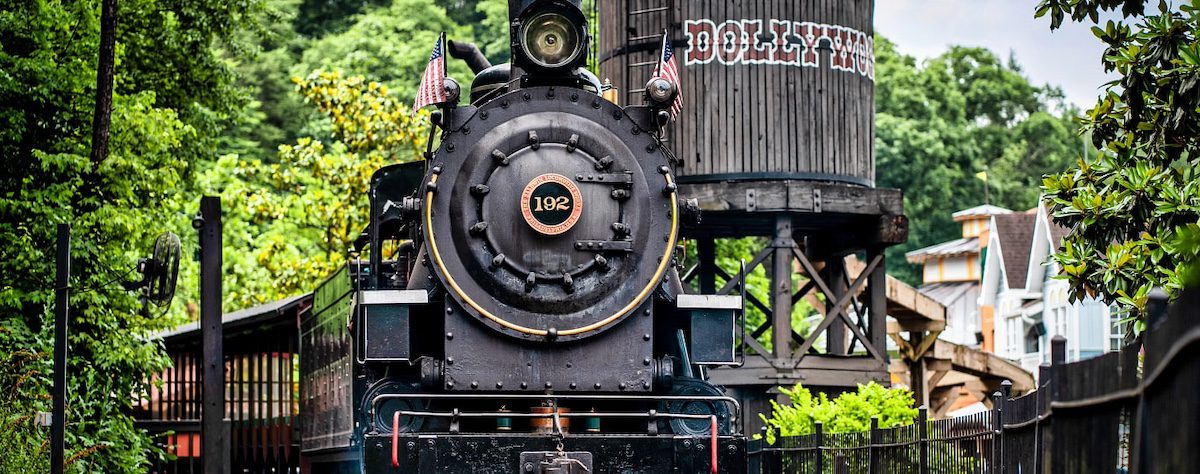
The project I’m most proud of was the Dollywood master plan – and this was Dollywood before people heard much about it. It was a tiny little park, and we did a master plan envisioning what it could become and working with Dolly and all her crazy ideas. We told them they could add hotels if we cut into the mountain and crossed over to the next valley. We said we could create a real theme park out of this place, and it really blossomed. Now it’s huge. So, it was fun because we’d be in these meetings with Dolly, and she’d say, “Aren’t these just a bunch of boy toys?” She wanted us to do some softer stuff and more girly things here and there, and it was just silly and fun.
Can you talk about what you are working on these days?
I advise companies on how to structure projects, put certain teams together, assist with operations, and sometimes, specific creative work, but I do short-term consulting. When I’ve been asked to be a Creative Director on a project or theme park, I don’t want to do that. I’d rather come in and advise for a day or two or three (maybe two or three months at the longest) where I can bring some value.
And then I do real estate development of resort homes with my wife. We built one in Arizona and one in Florida. My wife is a great designer, and it’s fun to do things with her.
You are going to your favorite theme park; which industry people (dead or alive) are you taking with you?
I’m at the point in my life where it’s more about having fun with somebody, and the somebody I thought of the most that it would be fun to walk with and either laugh at something or talk nerd stuff was Chuck Cancelier (former VP of Design at Landmark Entertainment Group). We used to do that – we’d go on research trips, walk around, say, “That’s really cool!” and nerd out on something or take notes. I remember going to Italy with him and just goofing around and having fun. He just had such a great sense of humor.
I would also take all my old bosses together: Gary Goddard, Jane Cooper, Joel Manby, and Christine Duffy, because they were all so different. It would be so funny to see them together. They each had a different angle. One was culture, one was operations, and one was a crazy creative person. I think that would be amusing!
Writer Kendall Wolf is a long-time consultant in the themed entertainment industry. She has worked with designers, producers, and fabricators to help developers create unique and successful projects around the world. In 2017, she introduced Merlin Entertainments to a development group in Sichuan province for the first Legoland park in China. Kendall continues to consult for the developer to open more themed resorts in China.
Follow us:
More Attractions Magazine stories:
No matter where you want to go, our trusted partner MEI-Travel will handle the planning so you can focus on the memories. They offer free vacation-planning services and have nearly 20 years of experience creating memorable vacations. Visit MEI-Travel for a fee-free, no-obligation quote today.
Great article again. It’s funny that Anthony thinks that backpacking across Europe is a strange thing to do because for those of us in Europe, it’s not strange at all. Teens and those in their early 20s buy inter-rail cards to get round Europe.