



Joe Rohde, former Imagineer, on why theme parks are art | Attractions Expert Q & A
Joe Rohde spoke with Attractions Magazine for an exclusive, in-depth interview about his tenure as the lead designer and Imagineering executive of Disney’s Animal Kingdom, and the qualities that define theme parks as an art form.


Joe Rohde bio & background info
Joe Rohde was with Walt Disney Imagineering for over 45 years, most recently as Senior Portfolio Executive. He was the lead designer of Disney’s Animal Kingdom, and the principal creative force behind the park’s Expedition Everest thrill ride, which debuted in 2006.
Joe was featured in an April 2006 documentary produced by Discovery Networks titled “Expedition Everest: Journey to Sacred Lands” during expeditions to China and Nepal. The treks were sponsored by Discovery, Disney, and Conservation International to promote the Expedition Everest theme park attraction and conduct scientific and cultural research in remote areas of the Himalayas.
Joe continues to be involved with wildlife conservation efforts and uses his skills as an artist to raise funds for programs. Most recently he spent a month in remote western Mongolia, painting to raise money for snow leopards.
Joe was also one of the lead designers behind the Disney Vacation Club property, Aulani, in O’ahu, Hawaii. After designing Aulani, Rohde was tasked with creating Pandora – The World of Avatar at Disney’s Animal Kingdom. The project took six years to complete and opened in May 2017. He led the team that transformed the former Tower of Terror at Disney California Adventure into Guardians of the Galaxy: Mission – Breakout! In 2020, Joe served as the lead developer on Disney Cruise Line’s second private day-resort, Lookout Cay at Lighthouse Point.

Photo by Blake Taylor
Editor’s note: This interview was conducted prior to the recent passing of Dr. Jane Goodall. During the interview, Rohde shared with us an in-progress project he was working on with Dr. Goodall. We have left Rohde’s remarks in tact.
Early inspiration from Pirates of the Caribbean
What theme park souvenir might we be surprised to find on your shelf? What’s the story behind it?
I have a cabinet in the house called the “tchotchke cabinet” where all the small stuff goes, and it’s full of all kinds of things. I have a heavy metal Caribbean doubloon, from when they used to give them out on Pirates of the Caribbean. I don’t think they’ve done that for the longest time, but back in the day you used to get these, and it was very cool.
It sits in a bowl full of historical coins which include Byzantine, drachma, and a reproduction of Elizabethan coin. The doubloon is in the coin bowl along with all the real and reproduction coins mixed in. I think they gave the doubloons out back in the ’60s. I have to think they probably kept doing that up until the ’80s. You got them from a machine when you exited the ride, and you were able to press a date onto them.
I don’t have a lot of theme park souvenirs in the house. When I was in my office, I had a bunch. But most of the stuff in the house is souvenirs from travel and going places. I collect masks. I always have and I have a big collection of masks — they’re all over the place. The ones that I really like are ones that nobody knows what they are. I’m the only person who knows, so I like those. There’s a little tiny black mask with a little tiny face, which I think is like 120 years old from Mexico. I have things from all over the world. I have a Nepalese shaman’s drum that I got from a shaman, so stuff like that.
What theme park have you always wanted to visit, but have never been to?
Where I haven’t been is not a Disney theme park. I haven’t been to Puy du Fou [in France]. I think that would be super interesting. Someday I will make it to Puy du Fou.
And then there is a spectacular place — not exactly a theme park — it’s like a resort. It’s a completely artificially made faux French village on a mountaintop in Da Nang, Vietnam, called Sun World Ba Na Hills.
Was there a theme park or attraction that made you want to be in this industry? How did it inspire you?
I grew up in Hawaii, so I didn’t go to theme parks because there are no theme parks. So I didn’t grow up with Disney parks and didn’t get to Disneyland until I was probably 11 or so. I grew up on film sets because my dad was a cameraman.
Pirates of the Caribbean probably had the most effect on me, because the first time I ever rode it was a warm, clear summer night, and I had no idea I was even inside until the very end, because of the spectacular scenography. I think the original Pirates has always been really one of my favorites. It’s an amazing classic. I remember being both swept away, and also very impressed.

Photo courtesy of Disney
And it’s not overwrought — it’s not trying to do too many things. It uses wonderful tried and true theatrical techniques very well. I just think it’s really great and it inspired me, but not necessarily as an Imagineer, more like as a production designer. I thought I was going to go into theater. I was 11, so I looked at it like, “Wow, look what these guys were able to do.” I had no idea I was going to end up at Imagineering.
What was your favorite ride/attraction as a child?
I think Pirates, for sure. We moved from Hawaii when I was about 11, but we had very little money, so we probably only went to Disneyland every couple of years.
Was there a ride, attraction, or character that frightened you as a child?
I wasn’t a big roller coaster guy until I had to work on roller coasters. There are roller coasters at Disneyland, but because it’s Disneyland, they’re friendly. They’re not intimidating.
For a long time, I could not ride coasters. I did not like them. I didn’t like going way up high and I didn’t like going really fast. But then I ended up having to build one (Expedition Everest), and it was like, well, in order to build one, we’re gonna have to go ride 20.


Photos by Blake Taylor
So I thought, “All right, here we go.” And then after that, I figured, “Okay, I’ve got this.” So yeah, we had to ride it over and over. I used to be able to do it many times in a row. Now I can ride maybe three times, and then I have to stop.
What was the oddest or coolest job you’ve had in your career?
I spent almost my whole life working at Imagineering, but before that, for several years I was an art teacher. I taught art, art history, and theatrical set design at Chaminade Preparatory High School. I really enjoyed it, and I think I learned a lot through teaching. Nowadays, teachers don’t have as much autonomy as they once did, but I really enjoyed it when I was there.
When you’re an art teacher, they give you all the troublemaking students, but I loved all those kids. I only saved one work of art from all of them, and it’s by one of those guys who thought he was goofing off, but I thought, “That’s really good; I’m keeping that.”
I considered going back to teaching maybe at university level, but mostly nowadays I occupy myself with collaborations with people in the Explorers Club and stuff like that. So I’m busy and I’m connected to things that make it hard to have a regular schedule.
The four rides everyone should experience
What ride/attraction do you think everyone needs to experience and why?
I think everyone should definitely ride Rise of the Resistance, Shanghai Pirates of the Caribbean, and Avatar Flight of Passage.
They’re all different, but they all experiment with technology and scenography. So I’d say those three have different angles on storytelling and the magic of technology, and how that magic of technology is used to propel a story.
They’re using each one slightly differently. With Flight of Passage, you know it’s a simulator. When you sit down, you’re aware of what’s happening, but it still sweeps you away emotionally.
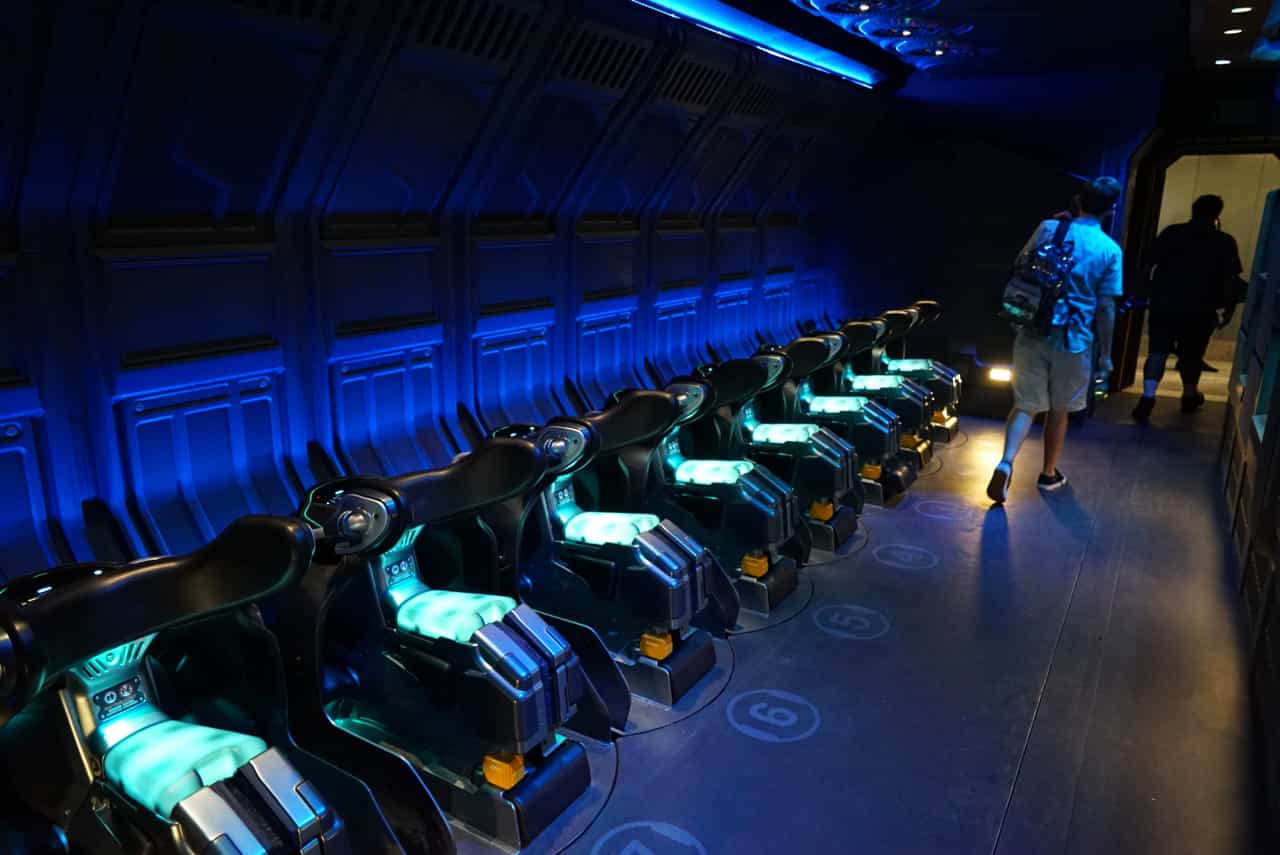
Photo by Attractions Magazine
I don’t know that people understand what’s going on in the Shanghai Pirates ride if you’re not a professional designer — like the boat sinking beneath the sea. That’s a technology that’s a kind of magic that’s hidden from you. You don’t know how it works.

Photo courtesy of Disney
Then Rise of the Resistance is just like this shell game of one trick after another, after another, switching rides and switching how things are done, so that it’s really just a fantastic catalog of illusory techniques, one after another. For guests, they just get to relax and enjoy being swept away. But for professionals, if you’re a designer, you’re always riding in two minds. Like I’m enjoying this for what it is, and I’m thinking about it while it’s happening. I think those three rides really teach people a lot.

Photo by Matt Stroshane / Disney
Although I would also say go back and ride the original Peter Pan. That ride is great. It’s simple, it’s successful, it’s magical. It’s kind of the opposite of the other ones.

Photo courtesy of Disney
Dreaming of the parks
If you were tasked with creating a new theme park food, what would it be?
So I’m in a theme park, I’m with my kids, and we want to eat. And we want to eat something that they will eat, and we don’t want to use a huge amount of time sitting and eating. So I think whatever this food is, it goes with you like a turkey leg, or a hot dog, like something you carry.
What comes to mind is not food. It’s those little squeezy things that you squeeze and the inflatable head pops up. It would be a nutritious tube of food that you can walk around with, and you squeeze and it and every time a shape pops out, and you eat the little shape. Maybe it’s a little character that pops up. And it has protein because you need some protein.
My kids are now full-grown adults, so I don’t have this worry anymore. But you’ve got to feed kids, because if you don’t feed them, they’re going to completely break down. You’ve got to feed them fast, and you want to go do a lot of things, so you might not want to sit down. So you want something you can carry. And if it was interesting, weird, and fun to bite, kids would eat it. Maybe it has a little a switch, or a dial, so it changes the shape of the character that you can squeeze out and bite into.
You’re a walk-around character for a day. Who do you choose?
I think if I was a walk around character, I could be a good King Louie. I like King Louie, and that would be a cool costume that I think you could have a lot of fun with it.

Photo courtesy of Disney
Rohde’s manifesto of attraction design and storytelling
What types of attractions would you like to see more of and why?
I’d definitely like more scenic graphic rides, rides with physical sets and props like Pirates of the Caribbean that are made of real stuff that really move. They’re in the room with you. I don’t care that the vehicle does some special thing, or if it’s autonomous. I want to see cool stuff that’s real on a ride, and I can tell it’s real.

Photo by Joshua Sudock / Disney
And the movement factor of the ride should not interfere with my enjoyment of the spectacular scenography. It’s a real conundrum. Because theater scenography works on the basis of sweeping you away, allowing you to project out of yourself and imagine that you are in some imaginary world. But ride sensations are about your body being really where it is in real time.
So every time I do something that makes people profoundly body aware, I’m fighting against the principle that you’re not really here, you’re really in a pirate fortress, in a haunted building, or someplace else. Because that requires an out-of-body sensation of just letting your imaginary self be in this world.

Photo by Blake Taylor
I think often people overplay the physicality of these rides. When the ride is predominantly narrative or predominantly scenographic, you need to make real decisions. What kind of ride is this? What am I doing here? Is this a scenographic ride? And if not, then you have toggle very clearly. Like this is the fast part of the ride where we don’t do anything, and now we stop, and something happens so that we can focus and enjoy. Because it really requires a different kind of mental focus. To enjoy scenography and to enjoy narrative is very different from enjoying going really fast and being up high.

Photo by Joshua Sudock / Disney
Think about it. The thrill of going really fast and being up high is exactly the thrill of knowing that your body is really there in real time — and that’s what’s happening. So in order for that sensation to be successful, it’s awfully hard to combine it with another sensation that says none of that is really happening. In fact, little dancing fairies are singing to you. Hard to do.
All over the world, people can make fast rides that go way up high. It’s a technological thing. What themed attractions do best is narrative. It’s this experiential narrative that takes time and focus and a certain kind of out-of-body mentality that it might all be real — and that is theater.
Like a magician, you really have to focus on: What does the audience know? What do they think? Where are they? How do they feel? Really focus on the audience as if you are them.
Because you can get swept away by what you want to say, and you can get swept away by how cool the experience is that you’re doing. But what really matters is, how is this experience perceived by a person? So you have to back away and say, “Wait. Just stop for a second. Stop and look and tell me, if you didn’t know anything, what would you see and what would you feel?”

Photo by Matt Stroshane / Disney
You really do have to step back sometimes. Just calm down for a second and look at this thing and ask yourselves, is it emotionally effective? Does it convey the idea it intends?
The work is complicated, it takes a long time, and it involves a lot of people. It’s very impressive to do the physical parts that need to get done, but you can drift off a little bit from the reason that it’s all being done, which is to create a psychological perception in the mind of a viewer. And sometimes that perception can be achieved with a fantastically simple illusion. And then it should be, in my opinion. The other thing is, this is not movie making. There’s no plot twist, no sudden reveal, no character exposition. None of that works.
In a way, by the time you engage an attraction, you have to know why you’re there. You need to be able to enjoy what it does, the illusions of it, the beauty of it, the magic of the reveals and the tricks and everything. You’re not there to figure it out; you’re there to enjoy it. And usually for most people, they have a very rare opportunity to do this — it could be once a year, it could be once every three years. So it cannot be making requirements of people; it cannot be hard.
I don’t believe it is productive for these sorts of attractions to be derived very much from game strategy. Because most of the conundrum you face is if you love games and gaming, you like really sophisticated, difficult and challenging games, right? That’s why you enjoy them. They take hours and hours to build up proficiency to where you can play them well. Then they become rewarding and really complicated. All the rubrics that you figured out how to do.

Photo by Blake Taylor
So imagine, like my family when I was young, we got to go to Disneyland, maybe every two years. We would do as many things as we possibly could in the day that we’re there. What if one of those things couldn’t really be enjoyed until you have proficiency, efficiency? Think about that.
So with games, there’s all that investment of time at the beginning, that’s hours of time, right? You don’t have that time in a park, which is why the park is so much more of a gift. Like, you’re already here, and here’s an experience. It’s really nice. It’s very cool. It’s for you and you don’t have to do anything.
The first time I went to Disneyland I was 11. The second time I was 13. The third time I was 15 and I was in high school, so I’d been to the park three times. I think these parks are gifts that are meant to be graciously given and are meant to be enjoyed flat-out, without requirement.
Photo by Blake Taylor
Some of that enjoyment has to do with layering. A good story, any good story should be enjoyable at various levels. You can read a really sophisticated narrative like “Moby Dick,” a super complicated novel, full of philosophy. As a kid, you can just read this as, “Some guys are on a ship are looking for a whale. Oh my God, it broke up the ship.” Okay, that’s a story.
Or you could go back like forever with Herman Melville, to whatever he’s talking about. You could spend years just on this one novel. A well-crafted story should allow you to come back again and again as you personally change, or your philosophy changes, or society changes. As you grow older, you see different and richer things as you return.
That’s the same why it’s smart to layer attractions. It doesn’t mean everybody needs to see everything. That’s not true. If they went to France, how many people spend a week in Paris, and have a fabulous time, but can they name three kings of France? Probably not. Can they remember the name of the guy who did all that urban design to make Paris what it is today? I doubt it. That’s a lot of backstory. Can they name the architectural styles of the buildings in front of them that they so enjoy seeing? I don’t think so. But they’re having a great time.
But somebody could come back and say, “I’m really curious. Why was it built like this? Because that’s a peculiar design. What is the story of how it got that way?” Now those buildings mean something completely different to them, because they’re looking at them thinking, “Oh yeah, one guy did this in one generation to most of the city.” So I think that all factors into how you enjoy a story. People visit the Louvre, which was built over generations, a castle of the kings of France, a residence for Henry IV, the Musée Napoleon, a bunch of stuff, but they don’t know. They’re just there on vacation. But that doesn’t mean the stories are not there. It’s just that you don’t need to know them to have a good time. That’s a different good time that they’re going to have on their next visit.
Or they come back for the food because the first time they visited, they said, “Wow, this food is great.” The second time they went back, they realized they wanted to learn more about the food, or now they know the type of meal they’re going to look for, or the kind of wine they want to drink. They now have learned of three great restaurants with amazing history. They know things they didn’t before. So they come back because it is there to come back to, because it’s not a simplistic one-note delivery system. Anyway, that’s my opinion.
Career journey from Imagineering to the present
Was there any challenge or surprise in your career?
First of all, I didn’t know I was going to have a career. I got a job in the model shop. That was my first job at Imagineering: a model builder. So my first challenge was figuring out, “What am I doing here? What can I even do that people want?”
I built sets as a theatrical set designer, but they were very simple — a little foam core, three sticks and a piece of Kleenex — they were not complicated. But the job I got was in the model shop at Imagineering, and I thought, “I am not good at this. I need to get the hell out of Dodge and get somewhere where I can do something I have some competence in.” So I had to migrate myself into two-dimensional work: painting, drawing, concept illustration.
I would have laid me off, because I was just not very good, so that was a challenge. I didn’t know anything. I knew about theater, and I knew about film, but I didn’t know anything about Imagineering. I didn’t go to the parks when I was super young, so I didn’t have that kind of built-in tradition. I just landed there. I thought, “Okay, clearly everyone’s very busy in this room. They’re all doing stuff. What are they doing and how do I fit in?” I think the first five years of my career were really challenging trying to figure out why I was even there.
I started as a model builder, and pretty quickly people figured out I was a lousy model builder. I could do the carved stuff, the more sculptural pieces, like rock work, but for all those super meticulous little architectural models, I was not terrible, but I was not good enough. I was lucky that I was able to find the opportunities to do something that I was good at.
I started working on color elevations for the buildings for Future World at Epcot. Finally, at least I was painting, which is something I knew how to do. That led to being assigned to do the painted surfaces of the black light models for the “Pinocchio” ride that was going into the renovation of Fantasyland [in Disneyland], but that was more like design because it’s black light, so everything that you paint turns into the illusion of something physical. It’s like 3D. So I had more design input in that situation.

Photo courtesy of Disney
Then that led to full-scale production. I went over to our production facility and was working on the full-size, something I’d been doing since I was like pre-adolescent almost, working on big sets. I really knew how to do that. Then of course, the workflow all stopped, and I thought “Uh-oh, this is layoff time,” and I would get let go if I didn’t get back into the loop.
I sort of started marketing myself as a concept illustrator on my own time. Like, “Hey, I’ll just do these concept illustrations as long as somebody knows I’m doing them.”
Then Tony Baxter brought me back from the production facility to begin doing early, early developmental sketches on an idea that eventually would become the Indiana Jones ride [at Disneyland]. But it wasn’t even that yet. It was just like “the haunted temple ride.”

Photo courtesy of Disney
That made me a concept illustrator. And once I was a concept illustrator, eventually, I’m in the concept room. Once I’m in the concept room, people want to know my opinion. And once they ask my opinion, my background in theater matters. So the part that I was successful at was as a concept illustrator, and then from there to concept development and on to being a director.
Finally, it all kicked in, but it took better than five years to get to that speed. I had a job as far as I was concerned and kept thinking, “I can’t believe I get paid to do this.” Otherwise, who knows what I would have ended up doing? I have no idea.
Can you talk about what you are working on these days?
I’m working with Jane Goodall on a visitor center in Arusha, Tanzania (at the Arusha Cultural Heritage Center, a cultural and educational complex designed to celebrate Jane Goodall’s legacy in chimpanzee research and conservation). She contacted me some years ago to help with concept design for the facility, which I did, and they started building it. Now I’m working with a group of people on the fit out of the interior presentation.

Photo by Matt Roseboom
Then I’m working with members of the Explorers Club on some art and science collaborative expeditions. I still show up at Imagineering once in a while, so that keeps me busy enough. It’s pretty cool.
‘The most complicated art form’
You’re going to your favorite theme park. Which industry people (dead or alive) are you taking with you?
Probably Herb Ryman. I spent a lot of time with Herb Ryman when I was first starting at Imagineering, because the guy who ran the Mexico Pavilion, which was my first job, was good friends with him. I would go to his house, and we would hang out together. He was a mentor to a lot of people. Herb Ryman was an adventurous character, and he was nobody’s fool. I think it’d be pretty interesting to visit Animal Kingdom with Herb Ryman and just go critique the whole thing.

Photo by Blake Taylor
I always try to tell people that we spend so much time and so much energy on these projects. They really are worth spending that much time and energy thinking about, not just doing. Thinking about them. What do they mean? Why do they work? What is the history of them? What is the pedigree of them? It’s the most complicated art form, I believe, that exists in the world. It involves every other art form that there is inside of itself, and it should be thought about like that, which I guess is academic — more philosophy, more thinking, more seriousness.
Architecture, painting, sculpture, music, landscape design — every possible art discipline that exists is incorporated in this art form. Because of that, the possibilities or the capabilities are very powerful if people would treat them as such.
Stay tuned to Attractions Magazine for daily coverage of theme park news, trip reports, and exclusive interviews from Disney, Universal, and independent attractions around the world.
More Attractions Magazine stories:
Follow us:

Writer Kendall Wolf is a long-time consultant in the themed entertainment industry. She has worked with designers, producers, and fabricators to help developers create unique and successful projects around the world. In 2017, she introduced Merlin Entertainments to a development group in Sichuan province for the first Legoland park in China.
Kendall continues to consult for the developer to open more themed resorts in China.

good stuff. Joe is so smart. (CEO of Disney anyone?) I found out he worked on Maelstrom, have seen his guardians TOT, Aulani, Animal Kingdom (so far I have found 3 references to him there).
Jo and Kendal re comments regarding sunken boat at Shanghai pirates of the Caribbean. Hate to inform we had a sunken boat scenario as last scene in the I Corsari pirate dark ride at Gardaland theme park Italy in 1991. The original concept by Mazoli bros- design and script by HHCP design and production by richard crane. This before I joined Landmark and after HOK. All these rides have borrowed from earlier versions . Shanghai not the first !
Chris Miles Design Director Lighthouse Creative Inc Orlando Fl