


Attractions Expert Q&A: Peggie Fariss started her 50-year Disney career in Storybook Land
Peggie Fariss spent 50 years at The Walt Disney Company, beginning in 1965 as a Disneyland ride operator and culminating as a Creative Development Executive for Disneyland Paris.

Since retiring from Disney, Peggie Fariss has mentored students to pursue their dreams, written a chapter for the book “Women of Walt Disney Imagineering” (currently in its third printing), and has recently been asked to join the Board of Directors for Ryman Arts, whose mission is to transform lives by creating access and opportunity for a diverse community of young artists.
What theme park souvenir might we be surprised to find on your shelf, and what’s its story?
When I left my position at Disneyland Paris (I was there from 2010 to 2015), my parting gift was a book that the team assembled, so I really treasure that. It’s one of a kind, filled with pictures of everything my team and I did while working together in Paris, so that’s a treasure.
In France, people take vacations for four weeks, so I knew if we didn’t have my goodbye party in July (before Bastille Day), we would never get together, so we had a little party in a beautiful cafe halfway between Paris and Disneyland, in what’s called a guinguette. At the turn of the century, when the impressionists painted people dancing under the trees at a cafe on the river, that’s what this was. My team surprised me by showing up in those blue and white striped shirts called marinières. They rewrote an Edith Piaf song and had an accordionist play it with their special lyrics.

We were called Imagineering Design and Show Quality, and we worked with the operating teams to ensure the parks and resorts continued to look as beautiful as they did the day they opened.
These teams are really unsung heroes because when you work on a project, it might take five years from Blue Sky through design development to construction and opening, but once it’s open, you need a team who are going to ride through Pirates of the Caribbean at two in the morning to make sure the lighting is still as it should be. Lamps burn out, and they have to be replaced, and you can’t just screw in any old bulb. Every light is designed to look a particular way.
There are 60 people on the team today (there were 25 when I arrived), and many of them had been part of building the original park, so they’ve been doing this for 20 and 30 years and take great pride in their work. My team paid so much attention to everything in the land while being supportive of theme, but safety is also a really important issue, so when pavement got wet, the operators had these two-foot plastic yellow cones that they would place all over the park, and we were like, These? Really? They were the bane of our existence.
When I was in Paris last month, I had a chance to meet with the current team, and one of the art directors showed me a gorgeous presentation for a thematically appropriate alternative to the hideous yellow cones. I was so excited to see that, but my team gave me a cone of my own that they all autographed, which is my other favorite souvenir.
What theme park have you always wanted to visit but have never been to?
I have not been to Shanghai Disneyland yet, so I would love to visit there. I have also heard Efteling is a really charming park. I think Michel den Dulk (who’s just become a Portfolio Executive for Disneyland Paris) was recruited by Tony Baxter from Efteling, so that’s a park that would be on my list.

What was your favorite ride or attraction as a child, and why?
When I lived in Anaheim, my mother would take my brother and me to Disneyland on my birthday every year. We loved the dark rides in Fantasyland—Peter Pan was a favorite—and we also loved to run around Tom Sawyer Island, the suspension bridges, the barrel bridges, and the caves.

I’m a child of the fifties, so we didn’t go on Opening Day to Disneyland, but we went throughout my childhood. I visited the park before It’s a Small World, Pirates of the Caribbean, and Space Mountain—I predate all of those. So, my first Disneyland days were different. It was a smaller park, but it was always really charming and fun.
Was there a theme park or attraction that made you want to be in this industry? How did it inspire you?
I have to admit that I never thought about people working at Disneyland. As a kid, I was so overwhelmed by the charm and the fun that I never made the connection. I just didn’t think about it.
When I started working at Disneyland, I never considered it a career. I had applied to UC Santa Barbara but was turned down because I didn’t have enough credits, so a friend said as long as I was going to a local college, why not get a job at Disneyland? She’d been working in the parking lot and having a great time but said I should tell them I wanted to be in operations. So I showed up for my interview (and honestly, I muffed the math test about tickets). They asked, if you start with this number and the ending ticket number is this, how many tickets did you have? Wow, I was supposed to count the zero. But I didn’t do that (and thank God because I might have been a ticket seller).

But in this case, my interviewer handed me a narration for Storybook Land. And it read, “Welcome to Storybook Land, everyone. My name is Peggie, and we’re on board the Katrina. Together, we’re going to relive some of the most famous fairy tales of all time.”I totally lucked out because the introduction to this was so gentle. We wore skirts and blouses covered by a white eyelet pinafore. We wore knee socks and little black flats. We sat on the canal boat filled with eight or ten guests drifting through the mouth of Monstro the Whale and then gliding along the canal. I would point out the homes of the Three Little Pigs, Toad Hall, and London Park, where Tinkerbell and Peter Pan taught John, Michael, and Wendy how to fly. I worked for two months, and I totally loved it. Then, one day, they said, “You have to report to administration; you need to talk to your supervisor.”And I thought, oh my gosh, what have I done? I got there, and the supervisor handed me a stack of envelopes and said, “Payroll would like you to cash these.” So, I’d worked for two months and never picked up my paychecks. Really? They pay you, too?
Then, the Assistant Director called me into his office and asked if I wanted to move up to 40 hours a week. I was going to college, so I didn’t want 40 hours a week. I remember saying, “That sounds fantastic, but I don’t plan to be here that long; I’m going to transfer to UC Santa Barbara in a couple of years. ”And he said, “That’s okay; we’ll just see how it goes.” And then, as it turned out, I stayed with the company for 50 years.
Was there a ride, attraction, or character that frightened you as a child?
No, I wasn’t frightened by any of them. I loved them all.
What is the oddest or coolest job you’ve had in your career?
I tried out for Disneyland Ambassador, a job where you’d meet dignitaries and visit children’s hospitals. They took us to the studio for lunch in the Coral Room, and Walt Disney was at a table just eight feet away. I grew up watching Walt Disney on “The Wonderful World of Disney” and “Disney’s Wonderful World of Color,” and I thought of him as being in the same category as my grandfather and Santa Claus. I didn’t get to meet him, and sadly, he died about four weeks later. It was devastating, but I felt lucky to have had a chance to see him in person.

I didn’t become an ambassador, but I had made such an effort and met so many people during those interviews that when they were preparing for the press conference in 1969 to announce the first phase of Walt Disney World, they asked me to be one of the ten hostesses. They flew us all to Florida, and we were there for two weeks learning the spiel about the presentation. Marty Sklar and some of the other Disney executives had a big circus tent next to the hotel filled with art and models, and the governor of Florida was on my bus, so I knew this was big time. We presented to the national press, executives from American businesses, and the Florida legislature. Then, I moved to Florida in 1971 (about six months before Walt Disney World opened) and started a position in the hotel company.

For the next five and a half years, I did convention sales and learned to coordinate meetings. I traveled around to represent Walt Disney World as a meeting destination. And then, one day, I bumped into Marty Sklar, who was a really warm and friendly guy. He said they were starting to plan Epcot and wanted to kick it off with a series of conferences, and since I knew how to plan a meeting, he offered me the job.
In 1976, I drove across the country and started working at WED Enterprises (and later, Imagineering). We held conferences with advisory boards around the topics involved in Future World. When we started working on Epcot, we had conferences to bring experts together. We told them we knew how to tell stories, but in Epcot, we wanted to tell stories that were more related to real-world issues. We asked if they could point us in the right direction and put us in touch with people doing important work in those fields.
Marty knew I had taken exotic classes, like Celtic mythology, Indian literature, and Art of the North American Indian. So, he asked if I would do the historical research for Spaceship Earth. And I got to do 40,000 years of communications history. It was such a plum assignment and something I truly loved. For two years, I looked for people who spoke ancient Egyptian and Phoenician. I found graffiti from the walls of Pompeii and Herculaneum, as well as people who played Renaissance instruments. And we incorporated all of that into Spaceship Earth. I was there last summer, and the attraction is still playing 40 years later. So, it was really quite fun – that was definitely one of my favorite jobs.

I was also a show producer for the Disney Gallery, which opened at Disneyland in 1987. We pulled art that the public had never seen and created the Art of Disneyland exhibit. My job was to interview each of the artists, like going to the home of Marc and Alice Davis and saying, “Marc, tell me about these concept sketches for the Jungle Cruise.” So, I got to know Herbie Ryman, Colin Campbell, Harper Goff, and John Hench. That was a fabulous assignment.
My very favorite and last assignment was leading the Imagineering team in Paris from 2010 to 2015. So, yeah, it’s hard to choose one favorite.
What ride or attraction do you think everyone needs to experience and why?
I would say Avatar Flight of Passage at Disney’s Animal Kingdom. It’s so incredible. I rode it for the first time last September, and I was overwhelmed by what an emotional experience it was.

You have this sense that you’re riding on a living creature. You feel the banshee breathing, and the visuals are so beautiful; you’re enveloped in the experience. I thought it was quite remarkable. It’s just transformative and amazing – so seamless and unbelievable – I hope everybody can experience it.
If you were tasked with creating a new theme park food, what would it be?
Michael Eisner once challenged us to come up with a fun food. He recalled how, as a kid, he went to the New York World’s Fair and tried a Belgian waffle for the first time. So, he asked Imagineering to come up with a new food, and we had a big brainstorming session.

There were many creatives on the team, and we also invited the operators from Disneyland and Walt Disney World (as well as the food people). We spent an entire day coming up with all kinds of food ideas. I had just finished a class on survey design, so I compiled all the food ideas and sent them out to the participants. I put in my survey, “Tell us how fun this food is and how feasible it is.”
I got the responses back, and we looked at the very fun and very feasible and tossed out the no fun and very hard. The food that emerged was what we called the “castle cone.” We had one with Mu Shu pork in phyllo dough and another with delicious berries in a really delicate cone. We flew to Florida to meet with Walt Disney World’s chefs and the marketing people, and it became the “handwich.” So I’ve actually done that.
You’re a walk-around character for a day; who do you choose?
I’ve been Chip or Dale (I don’t remember which one). And Pluto. Those experiences were amazing because no one could see me behind the big head I was wearing, but my face hurt from smiling so broadly.

Guests come up and give you a hug, and even though you’re not speaking, having that interaction with everyone was such a remarkable experience. I loved any of the costumes where you were in these kinds of fuzzy pajamas. Some are much more challenging because of the construction of the character costume, but it was really fun.
What types of attractions would you like to see more of and why?
I like attractions that are accessible to everybody. When I reflect on attractions I’ve loved, they tend to be immersive stories—everything from dark rides like Snow White’s Scary Adventurers and Alice in Wonderland to Pirates of the Caribbean.
John Hench used to explain why thrill rides are so attractive. He said it was because you think you might die, but you don’t, and it’s very life-affirming that you conquered this challenge and became the hero in the story. You come out the other side feeling more emboldened, more self-confident.

Last Summer, when I experienced Avatar Flight of Passage, I thought oh my goodness, this is so incredible. And the technology is so transparent that you’re not thinking about how they did that. You’re just thinking, I can fly. I am soaring through this amazing world! I believe that touching people’s hearts and giving them experiences that stay with them are the most important things.
Was there any challenge or surprise in your career?
What was wonderful for me was that, at each step of the way, I had opportunities to do things that took me out of my comfort zone.
Coming to work at Disneyland on Storybook Land was a really lovely introduction to learning how to interact with guests. At Imagineering, Marty Sklar was the champion of giving assignments you’d never done before (and maybe nobody else had either). For example, when he asked me to do historical research on Spaceship Earth, which covered 40,000 years of communications history, I had no background in that. I was an English major, not a history major, but I loved diving into the history and the cultures and immersing myself in the details while learning things along the way. I also learned that you can reach out to people who are experts, and they’re often so generous with their knowledge and happy to share with you what they know. So, that has been a huge lesson for me.

Photo by Samantha Davis-Friedman
Even accepting the assignment to go to Paris was out of my comfort zone because I don’t speak French, and I’d never led a team that large, but it was a fantastic experience. So now, when I have a chance to talk to young people trying to figure out their careers and lives, I tell them to be brave and take the step, and they will learn amazing things about themselves along the way.
I envy people who may have had a really clear path and knew what they wanted to do and how to get there, but not all of us do, so I would say,don’t be discouraged. Embrace the uncertainty because you never know how wonderful it might turn out.
Can you talk about what you’re working on these days?
A couple of things. We wrote a book called “Women of Walt Disney Imagineering” (available on Amazon and other places), and we have events from time to time where we get to talk to people about our careers and do book signings. I love those because I have a chance to speak to people one-on-one.

We are also spending some time with Girls, Inc. in Orange County. Kathy Rogers and I talked to 3rd, 4th, and 5th grade girls two weeks ago. They’re working on a project for the next four weeks, and then they’ll do kind of a Shark Tank. So, we talked about brainstorming and teamwork (and not being disappointed when your idea maybe doesn’t make it, because it might the next time) and being a good team player, but also being able to put yourself out there and voice ideas. Then Eli (Erlandson), Tori (Atencio McCullough), and I talked to 7th, 8th, and 9th graders last week, so that’s been really fun.
These young girls are trying to figure out and plan their futures. We told them to follow their passions, do what they love, do the very best they can in whatever they choose, and say yes to opportunities, even when they’re uncomfortable. And I never imagined that it would turn out to be so fulfilling.
I also just joined the board of Ryman Arts, an organization formed 34 years ago in honor of Herbie Ryman, an amazing artist and Art Director with a wonderful career in motion pictures. He’s the one who did that incredible, iconic bird’ s-eye sketch of Disneyland that Roy Disney took to New York to show investors, but Herbie would go on to partner with Imagineering to create amazing, iconic views of the various theme parks.
After Herbie passed away in 1989, Ryman Arts was formed by Marty Sklar and his wife Leah, Buzz Price and his wife Annie, Herbie’s sister Lucille, and Sharon Disney Lund. The program provides free studio art instruction and materials for promising high school students. I’ve never been on a board before, but when David Price invited me, I thought I would be honored to lend my energies to helping support the Ryman Arts program and provide art instruction to promising artists. And we know this transforms lives, so it’s a wonderful program.
You are going to your favorite theme park; which industry people (dead or alive) are you taking with you?
My first answer would be Marty Sklar. I’d also love to go with Herbie Ryman, Tom Fitzgerald, and Eric Jacobson because I know them all well, but I think I’m going to say Joe Rohde because Joe has such an incredible intellectual depth.
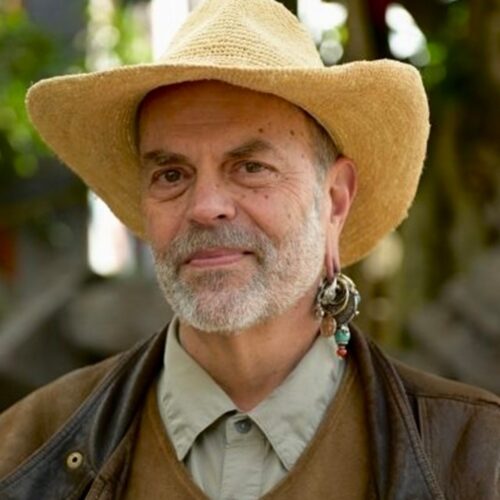
He’s very well-read and generous with his observations. I traveled with Joe and his wife Mel through England last summer to look at historic gardens. We spent ten days visiting gardens and then on to Oslo and Svalbard on an Adventures by Disney cruise, where Joe was a featured speaker. So I’ve seen him engage with people day in and day out, and he’s very kind and thoughtful.
We were sitting in a restaurant in Bruton, this little village in southwest England. It was tiny, about four tables, and the proprietor came out and took our order. Then he walked back to prepare the meal, and in that time, Joe sketched the proprietor in that setting. When the man returned with our food, Joe gave him his sketch. Joe is so fast, and he really captured the man’s spirit. And the guy just lit up; he was so delighted. Joe has this phrase, “leave a trail of art.” So, he does that wherever he goes. If he’s in Nepal, he does it. If he’s in Papua, New Guinea, he does it. He does it everywhere.
It always sends the same message: I see you. Joe has such a generous heart, amazing talent, and fantastic intellect. So, I think it would be fun to go anywhere with Joe Rohde and Mel Malmberg.
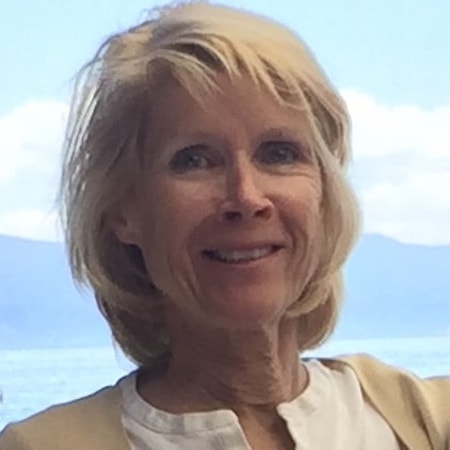
Writer Kendall Wolf is a long-time consultant in the themed entertainment industry. She has worked with designers, producers, and fabricators to help developers create unique and successful projects around the world. In 2017, she introduced Merlin Entertainments to a development group in Sichuan province for the first Legoland park in China. Kendall continues to consult for the developer to open more themed resorts in China.
More Attractions Magazine stories:
Follow us: