

Attractions Expert Q&A: Sanjay Das developed CG animation for ‘Shrek 2,’ ‘Kung Fu Panda,’ and ‘How to Train Your Dragon’
Sanjay Das is a business leader and a media producer with over 30 years of experience, in experiential media production, brand campaigns, visual effects, and feature animation, including several years at DreamWorks Animation SKG directing the development of 3D digital production tools for CG animation for mega blockbusters like “Kung Fu Panda” and “How to Train Your Dragon.”

Following his stint at DreamWorks, Sanjay Das became CEO of Academy Award-winning Tippett Studio, where he was responsible for ensuring quality media production and cutting-edge content for experiential productions, character animation, visual effects, and full CG productions. As the current president at Arevera Experiential, his focus is expanding the business into new worlds of immersive and experiential entertainment.
What theme park souvenir might we be surprised to find on your shelf, and what’s its story?
My pedigree is primarily in character animation and CG animation, and I worked on movies like “Shrek 2,” “Madagascar,” “Kung Fu Panda,” and “How to Train Your Dragon.” I have a lot of memories—and a lot of souvenirs from those— including the maquettes for Donkey, the Shrek character, and the Shrek babies from “Shrek the Third.”

There’s also a memorable one from a theme park because theme parks were really new to me when I entered that industry, about 13 years ago. My first experience going to a theme park was in 1993, at Disneyland in California. It was my wife, me, and a couple of friends, and we had no idea what to expect. I had just landed in the country from Singapore, and I was probably around 22 or 23. We went to the park and saw that there was a huge crowd to get in. It was July, so it was sweltering hot, but the vibrancy and the liveliness of the whole place were infectious—we were fascinated. We thought, is this world real? Does this kind of place really exist? It was such an eye-opener. We had no idea what to expect, so we entered the park and saw a lot of people standing in lines in Adventureland, Frontierland, Tomorrowland, Fantasyland, and the Main Square. We were completely lost. We didn’t know what to do; we didn’t have a plan, and we hadn’t done a whole lot of research. But then we got a map.
From the map, we figured out what the attractions were that people were lining up for and where we needed to go. And so, we got in line, but very soon we realized it was going to be hard to navigate, taking the map in and out of my pocket and trying to fold it back up. So, I put it on my back and asked my wife to staple it onto the t-shirt I was wearing.
And that became the navigation framework for the group—we’d rush from one attraction to another, navigating through the park using the map on my shirt. We got so excited after our first ride that we wanted to do pretty much everything. And at the end of the day, when we came back, I took that T-shirt off, but I did not remove the map. I kept it as a souvenir. It was a little tattered and stained with sweat, but I still have it, the shirt with the Disneyland map stapled to it. So that tells you something.
What theme park have you always wanted to visit but have never been to?
There are lots. I have tried to go to most of the North American theme parks. I’ve covered all the Universal Studios, Disney, and Six Flags here, as well as China, including Universal Beijing, Disney Shanghai, and pretty much everything.

But there’s a lot of growth happening in the Middle East region, and I would love to go. They call it the MENA—Middle East North Africa region. Dubai has been flourishing, with numerous new parks opening up. My very good friend, Mohamed Abdalla Al Zaabi, the CEO of Miral, now has several parks in Abu Dhabi, including Warner Bros. World, SeaWorld, and Ferrari World, which I really want to see. Those are three parks that I have not visited, and I have heard a lot of good things about them.
Was there a theme park or attraction that made you want to be in this industry, and how did it inspire you?
When we arrived in Los Angeles, we went to Disneyland on Saturday and to Universal Studios on Sunday. It was another eye-opener for us because it was a different kind of visceral experience. Very different from the emotional connection you have with the characters you grew up with from Disney—Mickey and Minnie, Winnie the Pooh, and so on. We went to see the E.T. Adventure, and our minds went completely bonkers seeing all that went on in that ride. E.T. was definitely one of the rides that really inspired me at that point in time. We had watched the movie and were big fans of Steven Spielberg.

Fast forward to 2001, when I was hired at DreamWorks, which was a big, exciting moment in my life. I was hired in DreamWorks’ Redwood City office, which was called Pacific Data Images (PDI). PDI created the first “Shrek” movie, and following its success, Jeffrey Katzenberg brought PDI into DreamWorks, where I was tasked with integrating PDI into the company.
That was basically my role coming in, bringing in that acquisition and integrating it within the DreamWorks framework. Then I became involved in various movies, and while working on “Shrek 2,” Universal approached DreamWorks. At that time, DreamWorks was not a property of Universal or Comcast—it was DreamWorks SKG with Steven Spielberg, Jeffrey Katzenberg, and David Geffen. Universal wanted to license Shrek and put an attraction in the park called Shrek4D. So, I became part of that and contributed to it, having worked on “Shrek 2.”

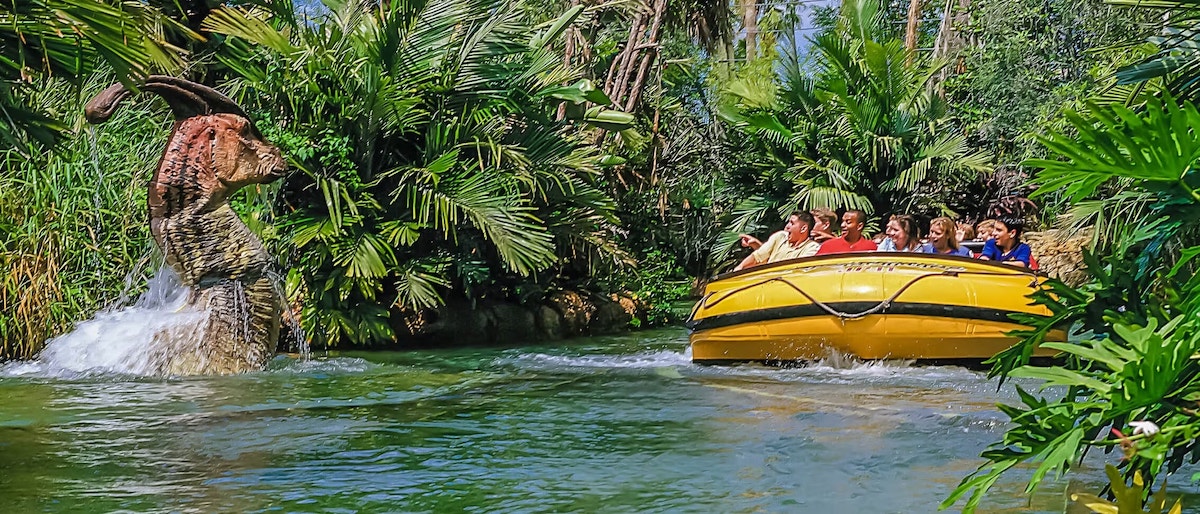
But what really inspired me was when I saw Jurassic Park: The Ride. I had just watched the movie “Jurassic Park,” which Spielberg made based on Michael Crichton’s book, which I had read, and it planted the seed in my mind about all theme park-related stuff. It was a completely different experience for me because one, I could connect with the book; second, I could connect with the movie; and third, I could see some absolutely minute details that were put in the ride just to make you feel more immersed. You’re going through on a boat and you’re experiencing some of the key moments of the movie, so you’re connecting with all that, and there are moments of little surprises that come in, and then suddenly out of the blue—it’s a big surprise—a huge drop! You get drenched, and you see all these people taking pictures. That was bliss—that’s how you go from those connected moments to cherished memories. I was totally inspired. I said, if I ever get a chance, I’m gonna do this.
What was your favorite ride or attraction as a child?
I grew up in Singapore and India, so we didn’t have that luxury—just maybe a few carnivals here and there, with merry-go-rounds, Ferris wheels, and carousels. So, my first real attractions when I came to America and went to Disneyland and Universal Studios.
As a little kid, I was really scared to go on the big rides, but as I grew up and saw other people having fun on them, I tried to convince myself to develop the guts to try, and eventually I became an avid roller coaster fan.
Was there a ride, attraction, or character that frightened you as a child?
Anything with heights—I was a little bit afraid of that. Like when you’re on a Ferris wheel and sometimes it stops—that would scare the heck out of me.
But I take everything as a challenge. If I have a fear of something, it’s in my personality to just kind of tackle it—I will not let it go by any means. I just basically force myself into things. So that’s what I did, and now my fear of heights is completely gone. I even tried skydiving!
What was the oddest or coolest job you’ve had in your career?
I would say the coolest job I’ve had would be with DreamWorks. I was part of the executive team, but I was also well-connected with the artists, writers, and animators. I started as a more technical person, then transitioned into a creative field, so I became a techno-creative force. And then from techno-creative, I became a confidant of Jeffrey, basically doing a lot of business development work for CG feature animation production and collaboration.

Image courtesy of Universal Studios Hollywood
It was the coolest job because it allowed me to work with all sectors of people involved in the beautiful, magical world of creating movies, in the craft of animation, working on such branded and popular IPs like Shrek and Kung Fu Panda. I was a person from a humble background, and now I’m interacting with all these people and learning the craft, with everybody being so open, welcoming, and helpful, and allowing me to participate in the process. That’s how I learned everything about the craft of filmmaking.
Today, I can easily be a creative director or a producer, which I have been for 17 attractions so far. I was the CEO of Tippet Studio for the last 15 years, helping Phil Tippett shape the studio and shepherd it into a new business segment of experiential/immersive productions, including the development of high-end flying theaters, dark rides, and motion simulation rides.
It was a challenge for a boutique studio, and being in California, we saw all the other companies getting decimated because the work was going away from California to Canada, the UK, and so on. Phil Tippett, the founder of the company, had no motivation to move out of Berkeley, and he felt very strongly about that. He said, “Sanjay, we’re not going anywhere. We’re gonna be here. We do our craft here, and we die with our craft here.”
What ride or attraction do you think everyone needs to experience and why?
This industry is full of surprises. People are so creative and so wild in terms of how they envision things and design and implement them, which is what makes it very fascinating. There’s so much variety out there. It’s like picking one would be almost a cardinal sin.
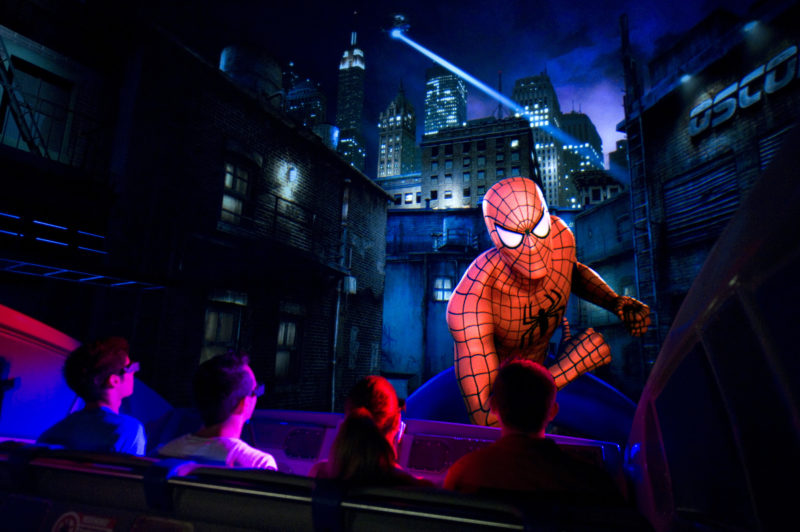
The one I’ve enjoyed the most, which absolutely fascinates me, and I’ve probably visited 25 times so far, is the Amazing Adventures of Spider-Man at Universal’s Islands of Adventure. Even today, when it’s over 25 years old, it’s still so fascinating—people who have not seen it should go.
The second is Harry Potter and the Forbidden Journey, which is primarily because it’s a classic case of how innovation and instrumentation borrow from other industries. For example, the whole KUKA arm concept—a German company created the arm to assemble cars and trucks—but they took that arm and put it on the Harry Potter ride, where four people can ride together in one car. It has six degrees of freedom as well: up, down, yaw, roll, and all that stuff—and it goes on a track as well. They orchestrated the entire experience to create an immersive one with Harry Potter.
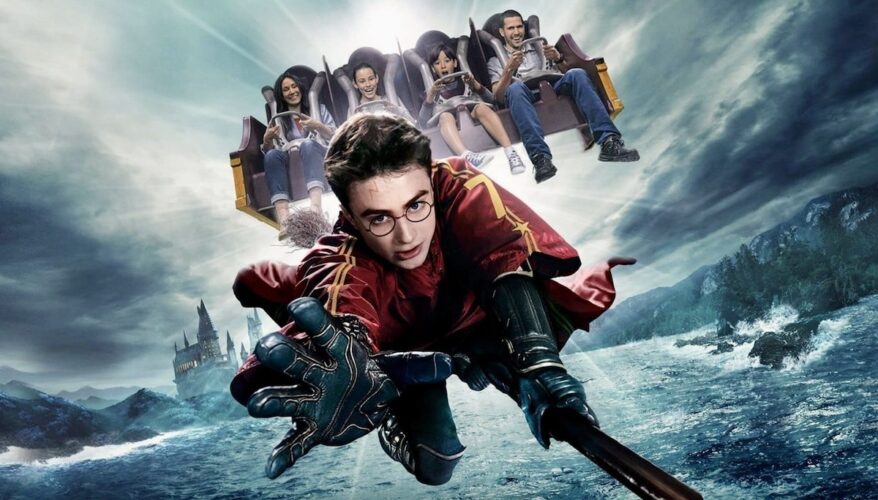
I think everybody should witness that kind of experience. And it’s not just the main show—it’s the whole experience from the queuing standpoint, where your curiosity keeps building because they are keeping everyone engaged.
If a wait time is 45 minutes, most people get on their phones to try to pass the time in line, but these guys figured out pretty much everything to minimize that. It’s a visceral connection, and at the same time, it’s an emotional connection. Because if you’re a fan, you absolutely will connect with all those visual elements. It’s engaging and immersive, with holographic images, portraits that come alive, and all the other special effects.

It’s a fascinating ride, and the beauty of Harry Potter and the Forbidden Journey is that it’s a trend Universal started, which is building worlds. Initially, we used to have individual rides based on IPs, but now they have created interconnected worlds. You have a smaller roller coaster that depicts a different chapter of Harry Potter, and then there’s a dining experience, as well as merchandising, all of which are interconnected.
I think that’s a good evolution, the progression of what theme parks are going towards, and that will continue because they’re all looking for more immersion. The pandemic has taught us all that things have to be different. The parameters and metrics of success that applied before the pandemic do not really apply now, as social dynamics and behaviors have changed for people. They’re asking for more demanding, immersive, and interactive experiences that are visceral and interconnected and that they can all relate to.
If you were tasked with creating a new theme park food, what would it be?
I actually did a case study on that when I was preparing for my ICAE examination. I was certified three months ago by IAAPA as a Certified Attraction Executive. It’s basically an examination that asserts you as an expert in theme park operations, food and beverage, financials, human resources, attraction development, creative development, and all that stuff. I passed that, and I’m probably the only media person in 150 countries to get that certification.
The food that comes instantly to mind is the turkey leg. It’s very popular in all the parks of Disneyland and Universal Studios. So, along the same lines, I would have something similar to that. Now that you have something on the turf, how about we have something on the surf side? I would have a spicy shrimp or lobster roll. I’d be the happiest person on Earth, and I wouldn’t mind paying 20 bucks for it.
You’re a walk-around character for a day; who do you choose?
Maybe I’m a little bit biased, as I connect with the world of storytelling and animation, so it’s probably going to be Shrek.

Shrek is a representation of every person in some shape or form, and he’s kind of surreal in many respects as well—the ugliness, the beauty, and the soul-searching kind of stuff. He resonates with the whole family scenario, and that appeals to many people, including me. Even though he’s unattractive, he’s actually beautiful. Shrek has a very good heart, a very good soul. That would be my choice—I can picture it.
What types of attractions would you like to see more of and why?
We have seen many attractions since the opening of Epic Universe, which I still want to visit, but I know a lot about all the rides there, as I bid on a couple of them. I think they’re on the right track, and Universal is doing great. They have an excellent team and put in a lot of effort. But Disney and Universal attractions usually cost anything from $150 million to $300 million and have an ROI of at least 12 to 15 years.
People are not going to movies as much now, and they’re looking for alternative forms of entertainment. Theme parks definitely serve a purpose, but they’re like a once-a-year or twice-a-year experience. For a family of four going to Orlando, it’s more like a once-in-three-years experience for them. So, how about we create something a little bit more accessible, budget-wise, that’s economical?
We have tier two parks, such as family entertainment centers, that provide a level of immersive experience and still create those cherished memories, albeit on a lower scale, without the need for significant investments like those of Disney and Universal.
And now I see that many family entertainment centers are being created with smaller footprints. Even in those locations, guests can have a really good experience that gives them an alternative form of entertainment, which is better than a movie but still more accessible than the larger theme parks. Like the park Universal is building in Frisco, Texas, the Universal Kids Resort. It has a smaller footprint that also takes into account regional sensibilities.

Image courtesy of Universal
Also, for a long period of time, attractions like the Shrek 4D ride, the Minions ride, or the Jurassic Park ride have been a singular experience. The other thing I’m very passionate about, which I’m also trying to work on, is how to make rides fresh by creating seasonal overlays, like for the Christmas holiday.
We basically try to alter the content a little bit and create something different. But by and large, it’s still the same experience. So, how do we do that, given the significant advancements in technology? Taking advantage of the latest innovations in technology, the creative process, and the innovations happening, how can we make it more relevant and fresher?
What I’m saying is, if you go on a Harry Potter ride today and again in three months, we could have a different version of the same ride—it’s possible today with the trends in technology. If you keep it fresh, people will keep coming back. When people have season passes, they come together because they share a communal experience, which is based on two main things: one is the thrill of riding with their family and friends. The second is hanging out in the park as a social experience. How do you make that more attractive and more compelling to them?
I would basically say to listen to the people and what they want, and I think there’s going to be a new wave of parks developing attractions in a more economical space that is going to become the new way of consuming entertainment.
Was there any challenge or surprise in your career?
A lot of challenges and a lot of surprises. Getting into themed entertainment was not easy because we were media people. When I started, around 12 or 13 years ago, with my first project, people did not fully understand how media needed to be integrated or how media-based attractions needed to be created. So, it was a challenging experience from that standpoint, and being accepted as well, because a lot of people in this industry have very strong opinions about how things should be done.
Another issue came from a structural engineering standpoint, because all the processes and terminologies are based in architecture, like master planning and blueprinting. And those were terms that were completely alien to us. We had never heard of those kinds of processes. The film development process is so startlingly different from the architecture development process, where you go from blue sky to concept development, schematic design, design development, production, to commissioning and opening. And these were all very foreign terms. So, there was a learning experience.
The other challenge coming from the film side was that a lot of people from my studio, the artists, said, “Hey, this is not a film project. We want to only work on film projects—not theme park projects where they don’t give any credits.” Credits are a very big deal in the film industry.
I had a lot of struggles and challenges to create my own team, a different team who were willing to work on theme park projects. But they eventually became so successful that we were getting 70% of our revenue from theme park projects instead of film and TV—it completely flipped, so that was quite a surprise.
I do a lot of speeches, and one thing I talk about all the time is how we have always seen the traditional way of how IPs behave in the themed entertainment world. Typically, 90% to 95% of the time, the IP has one particular rhythm. First, it lands in films, and then from films it gets carried on over into games and into other sectors. And Disney, Universal, and Paramount have IPs that they will try to put into their parks as well.
However, a concept I had seen and experienced was a surprise when we created our first flying theater, called Dream of Anhui, for a Chinese client—a very large real estate company called Wanda. Anhui is a province in China, and we had to create a full 6-minute CG ride. We couldn’t shoot it because it was too dangerous to fly helicopters in that particular region. We flew drones wherever possible to capture images for use on the ride. They were just for reference, and I’d have all my artists create them in CG, but I thought, who wants to go on a ride and just look at landmarks and landscapes? We also wanted to make it entertaining and fun. So, we introduced a story because at the heart of an attraction is storytelling. We created two animated Pixar-style characters to lead us through the whole journey of Anhui. Those two characters were very cute, and people connected with them. They looked and spoke Chinese, and we gave them some flair. And when the park opened, the attraction was one of the most popular rides.
Little did we realize the two characters we created as a part of the pre-show and then the main show—and who were only there for 30 seconds—would become hugely popular. People would come out of the ride talking about Sheng Yu and Fei, the two characters. The park’s presidents thought this was very interesting. I told them that Disney and Universal would create walk-around characters of Sheng Yu and Fei, and see if guests wanted a photo with them. They did, and they became so popular that there was a two-hour line just to get a picture with those characters. And then they got a deal with one of the production companies to buy those IPs and make a CG feature movie out of them as well.
That’s what I call the reverse IP phenomenon, which is what Disney had also experienced. For a long time, we went on this beautiful ride called Pirates of the Caribbean. There was no film, just an attraction. But then Disney realized that this was something they could make a movie out of. And today, it’s a 1.7-billion-dollar franchise—so that was a surprise.
Can you talk about what you are working on these days?
Currently, I’m the president of a company called Arevera, which was formerly known as Bipolar Studio. They are a Cannes Grand Prix award-winning company, and they do a lot of immersive brand campaigns with Aston Martin, Lockheed Martin, and General Motors. They’ve also worked with the Transformers and Iron Man brands. What I’m trying to do is leverage their competencies and fold them into creating this whole division of experiential entertainment with other partners.
I can’t talk much about it because I just joined three months ago. I was working with Technicolor on the same project, but Technicolor folded, and this company acquired my team from Experiential Entertainment. I’m trying to move the agenda forward to reshape and reimagine a new way of enhancing the human experience, working with some of the real experts in the industry. I can’t say who, because we don’t have signed contracts yet, but we are working on those partnerships.
We are also formulating partnerships in the Middle East, because that’s a huge focus for me. We just came back from participating in the SEA Expo in Riyadh, where we got a really great reception. In the next few months, you will see a lot more from us, as we are almost ready. I’m under NDA, so I can’t talk about it, but there’s a huge project coming up—a really critical and really cool project. It’s a giga project in the Middle East called Diyirah.
Diyirah is even bigger than Qiddiya, and it’s the closest project to MBS—Mohammed bin Salman, the President of the Kingdom of Saudi Arabia (KSA)—it’s his vision. The importance of Diyirah is that it is the birthplace of Saudi Arabia. And they’re building all kinds of museums and resorts, and currently it’s at $65 billion. So, three times bigger than Qiddiya.
You are going to your favorite theme park; which industry people (dead or alive) are you taking with you?
I have a very business-oriented mindset, which is how I got into this industry. So, Buzz Price would be one. He was instrumental in getting Disneyland off the ground, determining what would work in terms of attendance and operational parameters. If I had the opportunity, I would ask him, ‘Is this what you had in mind?’
I also value people who, in some shape or form, have mentored me, given me advice, and have been a source of inspiration. I would like to get their sense of what worked, what more could be done—people like Phil Hettema. I really admire him and have worked with him a few times as well. Also, Thierry Coup, who, in all my conversations and dealings with him, has been really inspiring.

And Jim Shea from Premier Rides builds some of the best and most fascinating rides in the world. I had the privilege of working with him for five years in China, and I value his opinion a lot. Monty Lunde would be another one. He’s really been a source of advice and inspiration for me as well. Everything Monty has done, including building the TEA, is truly amazing. That is what is fascinating about this industry, that there are organizations like the TEA and IAAPA, which are absolutely fabulous. They help the whole cause and the process as well. There’s an opportunity to learn from each other, and they’re welcoming—they don’t shut you down by any means—they’re always open to new ideas and new blood.
And the beauty is that the TEA always has many events going on, and you can capitalize on those events, because at the end of the day, this is a relationship industry. You’re building an attraction that requires many different vendors and suppliers to come together, and there’s a trust and safety factor associated with that. People need to have a very high degree of trust in each other; otherwise, many things will be compromised, including the quality of the experience and safety. We have to consider the whole experience aspect of things, because at the end of the day, what we’re doing in this industry is taking a story and turning it into a cherished memory.
Writer Kendall Wolf is a long-time consultant in the themed entertainment industry. She has worked with designers, producers, and fabricators to help developers create unique and successful projects around the world. In 2017, she introduced Merlin Entertainments to a development group in Sichuan province for the first Legoland park in China. Kendall continues to consult for the developer to open more themed resorts in China.
Follow us:
More Attractions Magazine stories:
No matter where you want to go, our trusted partner MEI-Travel will handle the planning so you can focus on the memories. They offer free vacation-planning services and have nearly 20 years of experience creating memorable vacations. Visit MEI-Travel for a fee-free, no-obligation quote today.