



Attractions Experts Q&A: Leslie Iwerks
Leslie Iwerks is an Oscar and Emmy nominated documentary director and producer, and her production company, Iwerks & Co., is an award-winning full-scale media production company committed to creating a portfolio of powerful and inspiring stories for theatrical, television, web, and digital platforms.

By Kendall Wolf
Leslie Iwerks is a USC School of Cinema-Television graduate and serves on the USC School of Cinematic Arts Alumni Council. She is also an active member of the Academy of Motion Picture Documentary Branch, the Producers Guild of America, the Television Academy, and the International Documentary Association and serves on the Academy of Motion Pictures Arts & Sciences Scientific and Technical Committee board.
Her Santa Monica and New Orleans-based company produces documentaries and commercials and develops narrative features, animation, and television projects for clients and collaborators including Warner Bros., HBO Max, The Walt Disney Company, Disney+, Walt Disney Imagineering, Pixar Animation Studios, Riot Games, Hearst Corporation, Lucasfilm, The Academy of Motion Pictures, HBO, National Geographic, Starz, A&E, Bravo, MSNBC, GE, NRDC, the Producers Guild, BAFTA, the Annie Awards, Academy of Motion Pictures Scientific and Technology Council, University of Southern California, Walt Disney Consumer Products, the Visual Effects Society and the Sierra Club, among others.
What theme park souvenir might we be surprised to find on your shelf and what’s the story behind it?
A glass jar of dirt from Shanghai Disneyland. When the park was still just dirt, I took a scoop and put it in a jar. In my film, the Imagineering Story, I documented Shanghai Disneyland from dirt until opening day, so it was a special time to be there at the groundbreaking.

What theme park have you always wanted to visit but have never been to?
I would’ve liked to have gone to Nara Dreamland in Japan, the park that was completely decimated, like a ghost town. They copied Disneyland, but it went bust and was abandoned in 2006. It was finally demolished, but I always wanted to see that.
Was there a theme park, ride, or attraction that made you want to be in this industry and how did it inspire you?
I would say Pirates of the Caribbean at Disneyland was the one I always loved the most as a kid. My grandfather [Ub Iwerks], of course, worked on it and helped invent the fireflies and the animatronics.

The book my dad [Don Iwerks] wrote about my grandfather, Walt Disney’s Ultimate Inventor: The Genius of Ub Iwerks, has many of the inventions my grandfather came up with for the Disney parks, including the fireflies and a lot of technical effects for the Haunted Mansion. My grandfather was inspirational as both a visionary and creator – he would come up with an idea and could execute it.
What was your favorite ride or attraction as a child, and why?
As a child, I would have to say Pirates of the Caribbean – but The Haunted Mansion is a close second.

As an adult, one would definitely be Mickey and Minnie’s Runaway Railway (in Hollywood Studios), which has an “Easter Egg” sign that says “Iwerks and Uwerks Waterworks,” which is a tribute to my grandfather and my family – Iwerks for my family and then Uwerks for Ub. That’s one of my favorite attractions.
Was there a ride, attraction, or character that frightened you as a child?
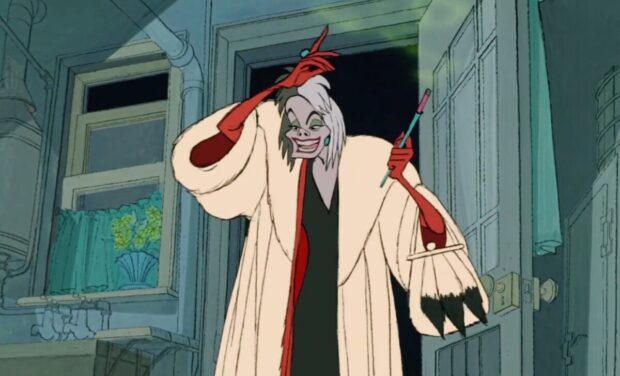
Cruella de Vil of “101 Dalmatians.” As a kid, a story about a crazy woman who wanted to skin dogs to make a coat freaked me out.
On the opposite side, my hero as a kid was the VW Bug, Herbie, from “The Love Bug.” Now and then, my dad would take me to the studio, and while he was working in the machine shop, I would roam around the back lot. I remember one day I discovered right in front of me was the VW Herbie, just sitting there. And I remember going, “Oh my god!” like it was a celebrity. I kept thinking it was going to come alive. It was so cool; it was my first impression of movie magic.
What was your oddest or coolest job in a theme park or your company?
My coolest job was directing “The Imagineering Story” for Disney+. From beginning to end, it was almost a six-year project. I traveled to all the parks and resorts around the world and interviewed over 200 Imagineers. I went behind the scenes on all sorts of attractions to see how they were made. Going inside the Matterhorn and shooting hoops with Bob Gurr was probably the most fun, once-in-a-lifetime experience.

I made six trips to Shanghai, walking through the mud in the pouring rain with my construction boots and hard hat and interviewed people like Jon Snoddy and others developing the rides while we were in the mud, the dirt, the cold, and the heat. That was one of the most interesting opportunities – to see a park built from groundbreaking to opening day.
What ride or attraction do you think everyone needs to experience and why?
Pirates of the Caribbean: Battle for the Sunken Treasure in Shanghai and Star Wars: Rise of the Resistance in Anaheim and Florida. I think those are the best attractions in the world right now. Pirates of the Caribbean in Shanghai utilizes technology, animation, audio-animatronics, physical effects, visual effects, story, and audio, all integrated, dissolving seamlessly from one scene to another, transporting you into worlds you would never experience. The projection pulls you down and literally makes you think you’re going underwater.


In Rise of the Resistance, trackless vehicles, animatronic figures, practical sets, projection mapping, and proprietary special effects create a 15-minute ride experience unlike anything Disney has ever built.
I must mention another great attraction at Disneyland Shanghai (which is now also at Magic Kingdom), Tron Lightcycle Power Run. Scott Drake was the Imagineer leading the whole attraction, and he invited me to ride it with him before it opened. I think I was the first person to ride it outside the company, and it was amazing.

Photo by Samantha Davis-Friedman
If you were tasked with creating a new theme park food, what would it be?
I would love a smorgasbord of selected cheeses from “Ratatouille,” handpicked by Remi (the rat known as “Little Chef”). It would be a curated charcuterie and cheese plate prepared by Remi with the fanciest cheeses he would eat.

You’re a walk-around character for a day; who do you choose?
Mickey Mouse, of course.
What types of attractions would you like to see more of and why?
More attractions that really transport you to different worlds. Anything so unique that you could never do in real life, and all the adventures you watch in a movie and wish you could do yourself like in “The Rescuers,”where you want to fly on the back of a bird or ride the doors like in “Monsters, Inc.”
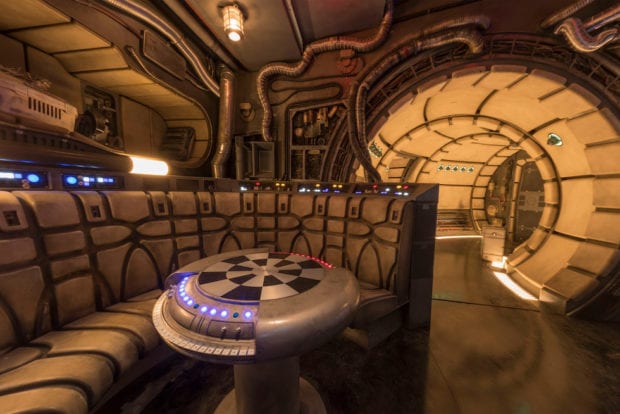
Attractions that transport you, like Soaring, are such great experiences; they really make you feel like you are flying. That’s what Disney does best. Name any attractions that transport you – Mission: Space, Test Track, Cars Land, Star Wars: Galaxy’s Edge – that’s what Disney does in such a classy, detailed, and quality way, and there is no comparison.


Walt had an early and definitive vision that he could turn his movies into three-dimensional experiences. You could walk through the castle and inside the castle and enjoy these animated films in a physical way, not just on a 2D screen, but he created a kind of vertical integration of his IP, and then merchandise became part of that experience. Mickey Mouse ears were a part of that concept where you can become a character and walk around the park. There are endless opportunities as people will keep enjoying how the Imagineers continue to innovate and surprise.
It would be great if Disney could create new content that’s not just IP-based from films but come up with some new characters like they did when they started. It obviously makes sense to capitalize on the Pixar IP, the Star Wars IP, and the Marvel IP, but do we always have to be so reliant on IP versus coming up with new ideas that are strictly introduced in the parks or as a wholly new concept?
Do you recall any surprises or challenges you encountered in your career?
I grew up in the world of Disney from my grandfather to my father, and I was fortunate to be a fly on the wall for the innovations they both developed for Disney. I did a film on my grandfather called “The Hand Behind the Mouse” back in 1999, which Disney released. This was my first experience after film school, and doing this film, I learned about my grandfather’s relationship with Walt Disney and how they met in Kansas City and became good friends. They developed a yin and yang collaboration in creativity, business, vision, and technology. They were so like-minded yet had unique skills that made them a great team, ultimately coming up with Alice in Cartoonland, Oswald the Lucky Rabbit, and Mickey Mouse.

When I made that movie, I had many surprises and learned things about my grandfather – and in the process, I learned a lot about myself. As a young filmmaker, I felt compelled to work as hard as my grandfather did and try to be as brilliant and make my own name for myself. I could never compare to him, but it inspired me to tell his story, have Disney release it, and put it up for Academy Award consideration.
From there, I was hired by John Lasseter, Steve Jobs, and Ed Catmull to do “The Pixar Story,” and that transported me into the world of CG animation and the world of Pixar behind the scenes. That was exciting and challenging in its own way but really fun. Then, I was hired by Starz, George Lucas, and the ILM gang to do the ILM documentary, and that transported me into the world of visual effects through movies and the origins of ILM.
The opportunity to do “The Imagineering Story” tied a lot of it together as it took some of the IP I had already documented, like Pixar and Lucas, and showed how that IP is implemented into parks, rides, and lands. That also allowed me to interview some of the same people I did for my previous films, talking about the applications to the parks.

I had no idea all these films I would do are uniquely tied together, and I’ve become an expert on many of these brands and the evolution of imagination, business models, IP expansions, and the ups and downs of big creative organizations.
Can you talk about what you are working on these days?
No, I can’t (I’m in development on several things), but I can tell you I did two series for HBO Max: the four-hour “100 Years of Warner Brothers” and a three-part documentary called “Super Power: the DC Story” on the history of DC Comics.
I also wrote the 700-page book based on the documentary “The Imagineering Story,” which was a great opportunity to continue the storytelling of what couldn’t make it into the documentary.
How did your father and grandfather inspire you in your work?
They inspired me, from Mickey Mouse to the multiplane camera (which my grandfather developed) and his Oscar-winning visual effects. My grandfather’s attitude was “Never give up” and “Yes, we can do it.” Walt would say, “If there’s a problem, go ask Ub; he’ll figure it out.” I grew up around that.
My father followed in his footsteps in innovation, starting with “20,000 Leagues Under the Sea,” continuing with filming in Circle-Vision around the world and helping to develop the technology for “Star Tours.” There were also countless innovations in cameras and projection technology, such as the endless loop cabinet that provided amazing cost-savings for Tokyo Disney and Walt Disney World in many of their shows and led a whole team of creative and technical people.

I’m really thankful for the life my father provided me and my sister and brothers. It was like a shot in the arm for me as a kid to see behind-the-scenes magic of the movies and the parks. My dad’s hand was the original mold for the Lincoln animatronic figure at Disneyland, so we had a rubber hand we used to hide in different places around the house to scare people. My dad would bring home a 16mm projector and project animated features on the wall, and we’d have all the neighborhood kids over and watch movies.
Many years later [for “The Imagineering Story”], I had the opportunity to literally relive my childhood by interviewing the people who created all these attractions and traveling behind the scenes like I did as a kid. Having “The Imagineering Story” as one of the top shows on Disney+ when it launched was a real honor. It was very much a beloved series, and I was honored that the studio trusted me to tell the story in an authentic and honest way about the ups and downs, the trials and tribulations, and the mistakes. And I think that’s what made it so successful.
You are going to your favorite theme park or attraction; which industry people (dead or alive) are you taking with you?
My grandfather, Walt Disney, and Roy Disney. I’d like to walk around the park with the three of them and ask about their memories of Mickey Mouse’s creation and what they think about how popular Mickey is today. And then I’d like to ask them what they think of the latest technology and how the studios continue to innovate and expand their original design into the parks.

I’d love to take them on rides like Star Wars: Galaxy’s Edge and Pirates of the Caribbeanin Shanghai so they could see how brilliant the Imagineers are and show them the latest state-of-the-art audio-animatronics and how far it’s come. I’d also take them to see the stuntronics at [Avengers Campus] so they can watch the audio-animatronic [Spider-Man] fly in the air and do spins and twirls.
It would be amazing to talk to Roy about the business. I’d love to speak with Ub about innovation and technology, and […] I would ask Walt what he would do differently and what he would do next if he could see where it is today. What does he see that is still needed? And I would wonder if his answers would be to focus on hospitality, focus on quality, and focus on humanity. He was so much about the guest experience. He always said, “Don’t ever forget to walk in your guests’ shoes.” I think he would reiterate Marty Sklar’s “10 Commandments” and end it with the tenth one by saying, “Keep it up.”
I’d also love to show my grandfather Soaring and the projection systems, camera systems, and state-of-the-art technology he started, like the sodium traveling matte process that helped to combine the seamless integration of animation and live action and the […] camera system like a giant Xerox machine across two or three rooms […] that literally saved Disney Animation when they used it for “101 Dalmatians.” It would be interesting to show him how those innovations have evolved into today’s technology.
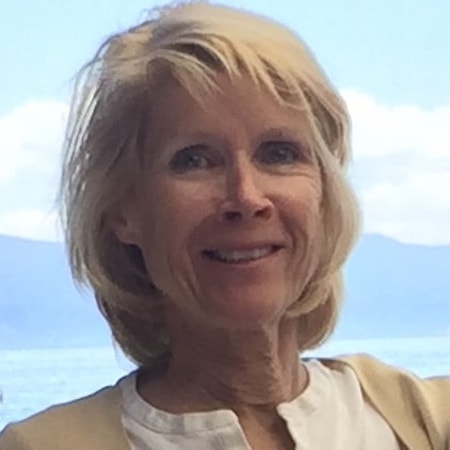
Writer Kendall Wolf is a long-time consultant in the themed entertainment industry. She has worked with designers, producers, and fabricators to help developers create unique and successful projects around the world. In 2017, she introduced Merlin Entertainments to a development group in Sichuan province for the first Legoland park in China. Kendall continues to consult for the developer to open more themed resorts in China.
I absolutely love this series of articles but was really excited to see that the latest covered Leslie Iwerks. I was lucky enough to see her presentation last September on the DVC Member Cruise to which she brought the Lincoln rubber hand with her.