


Could Universal’s next ride seat mold itself to your body?
A newly granted Universal patent describes a theme park ride seat that could mold itself around an individual passenger, become firmer during high-force portions of an attraction and reset its shape for the next rider.
Universal City Studios was awarded U.S. Patent 12,703,284, “Systems and Methods for Adjusting a Seat Pan for a Ride Vehicle Seat,” on Aug. 11, 2026.
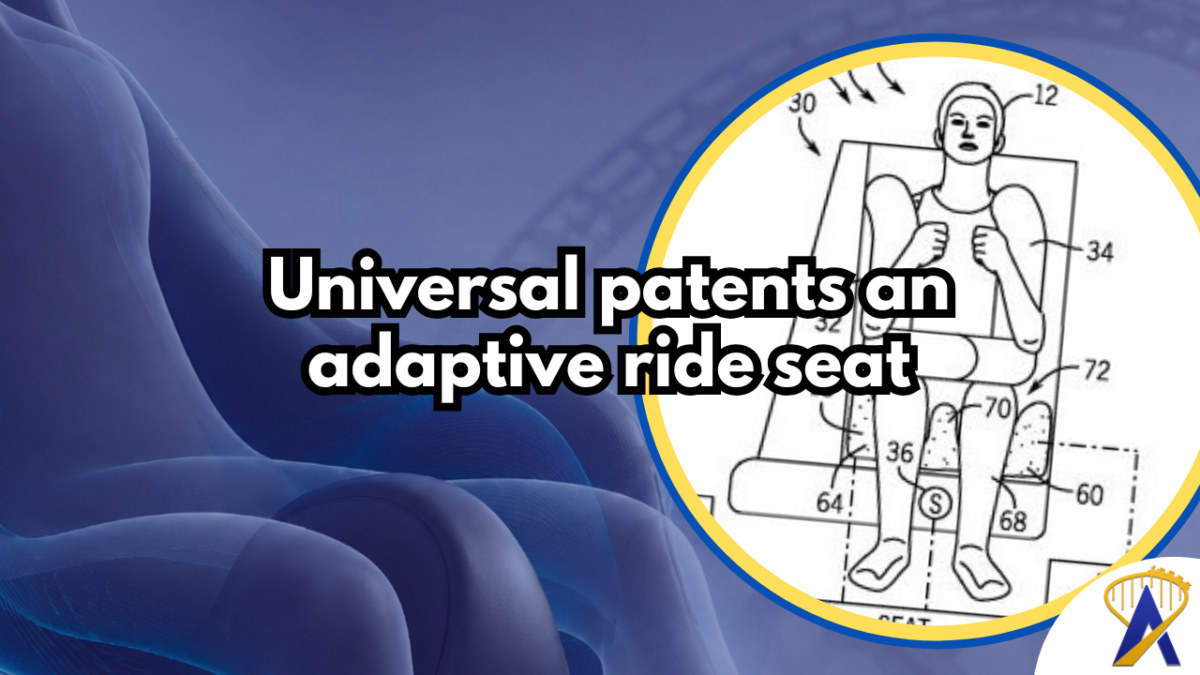
The patent might address a long-running challenge for thrill rides: how one seat design can safely and comfortably accommodate passengers with very different body shapes, sizes and proportions.
Universal says (in the patent’s detailed description) passengers of varying “ages, sizes, and proportions” may want to experience attractions and that ride seats could be designed to accommodate a wide variety of “body types, shapes, and sizes.”
The seat could reshape itself for each rider
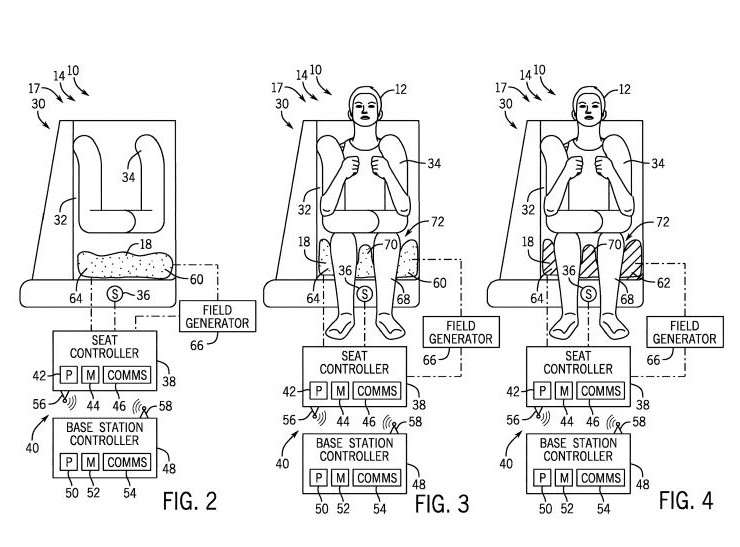
The concept starts with a seat pan that is soft and deformable when a passenger boards.
As the rider sits down, their weight causes the seat pan to conform around portions of their body, including the legs and buttocks. Once that custom contour has formed, the seat can stiffen and maintain the shape.
In simple terms: One physical ride seat could reshape itself to fit each passenger differently.
At the end of the ride, the seat can soften again. When the next passenger boards, it can form a new contour based on that person’s body.
From pubs.uspto.gov
It could also help support and contain the rider
As a passenger settles into the soft seat, their weight can push part of the seat pan upward between their legs to form what Universal calls a pommel. Other portions can form concave areas around the rider’s legs, buttocks and potentially back.
Once the seat stiffens, those contours could provide additional lateral support and resistance against sliding as the ride accelerates. Universal says the shape could help support, stabilize and secure the passenger.
The patent still depicts a separate restraint system, so the adaptive seat is not presented as a replacement for lap bars, shoulder restraints or other conventional restraints.
Related: Universal awarded four patents in one day
From pubs.uspto.gov
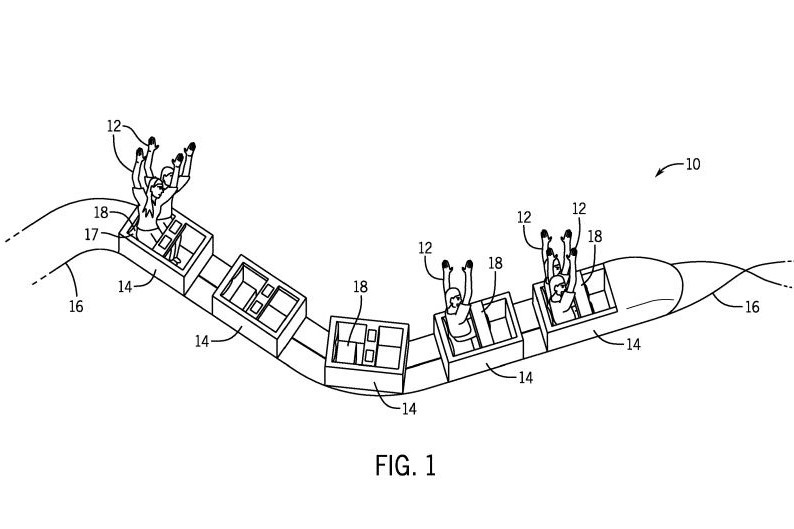
The seat could stiffen before a loop or hard turn
One of the more unusual aspects of the patent is that the seat would not necessarily stay at one firmness throughout the ride.
Universal describes sensors that could detect passenger presence, weight, pressure, body characteristics, acceleration and g-forces. A controller could then adjust the stiffness of the seat pan based on that information.
The patent specifically says the seat could become firmer when the ride begins, when speed or acceleration reaches a threshold or when the vehicle approaches features such as hard turns or loops. It could then soften or change stiffness again later in the ride.
That means the same seat could theoretically provide different levels of support during loading, acceleration, high-force elements and unloading.
Courtesy of Universal Orlando
How does the seat change from soft to firm?
Universal proposes several possible materials. One is electrorheological fluid, or ER fluid, which can become more viscous when an electric field is applied. Another is magnetorheological fluid, or MR fluid, which responds to a magnetic field.
Without the field, the material can remain more fluid and allow the seat to deform beneath the passenger. When activated, the material becomes more resistant to movement, helping the seat retain the contour formed around the rider.
Universal also identifies other possibilities, including shape-memory materials, piezoelectric materials, electroactive polymers and conformable metamaterials.
Could this help more body types fit thrill rides?
Potentially, but the patent does not establish that outcome. Universal explicitly frames the invention around accommodating differently shaped passengers, which makes the body-size implications notable. Still, the patent focuses on the seat pan, and any ride using the technology could still have separate restraint requirements.
The filing does not say the system would allow guests who currently cannot fit a particular restraint to ride.
An important note about timing
Universal filed the application on Dec. 19, 2023, nearly two years before the fatal Stardust Racers incident at Epic Universe. The patent therefore should not be interpreted as a response to that event.
As with any theme park patent, there is no guarantee Universal will use the technology in a future attraction. But the concept points toward a ride seat that could be far less static than today’s designs — changing shape for each rider and even changing firmness as the ride itself changes.
More Attractions Magazine stories
Follow us:
Ready for adventure? Our trusted partner Universal Fan Travel will handle the planning so you can focus on the fun. They offer free vacation-planning services and have nearly 20 years of experience creating epic vacations. Visit Universal Fan Travel for a fee-free, no-obligation quote today.