

Attractions Experts Q&A: Matt Brown worked on The Wizarding World of Harry Potter at Universal theme parks in Florida, California, and Japan
Matt Brown, Vice President of Nassal, has worked with the company for nearly 30 years and oversees all sales and client relationships for the company, as well as marketing efforts globally.

Matt Brown is experienced in the design, fabrication, and installation services required to deliver complex specialty projects from the early stages of preconstruction through installation. Notable projects include The Wizarding World of Harry Potter at Universal theme parks in Florida, California, and Japan and the Space Shuttle Atlantis at the Kennedy Space Center Visitor Complex in Cape Canaveral, Fla.
What theme park souvenir might we be surprised to find on your shelf, and what’s its story?
I am lucky to have several mementos and souvenirs from the projects we have built since I joined Nassal in 1996. Most of them are static, but I do have one that is interactive, and that’s a lightsaber I built at Savi’s Workshop in Galaxy’s Edge.
I had the chance to experience the Star Wars: Galactic Starcruiser in Orlando, a short-lived but immersive Disney attraction that simulated life aboard a spaceship for two days. As part of the journey, guests could book excursions during their stop at Galaxy’s Edge, and I signed up to build a lightsaber—not knowing what to expect.

It seems unusual because I am not a high-affinity Star Wars fan, yet I was fully drawn into the experience. I put together a hilt of power and control and utilized a blue crystal for peace and justice, which created a strong but judicious saber. It is by far the most discussed and played with souvenir in my office.
What theme park have you always wanted to visit but have never been to?
I’ve always heard that Tokyo DisneySea is the most beautiful park in the world, so that’s one I’m anxious to go to.

The other one I would love to visit is Europa Park in Germany—just to see what they’ve done. It’s been built by one family for eight generations, which I think is intriguing.
Was there a theme park or attraction that made you want to be in this industry, and how did it inspire you?
There were actually three. I grew up in Florida, near enough to Orlando that we could go to Disney World quite frequently. Back in the day, my parents would take us over to River Country, the original Disney World water park, and just drop us off. It was incredible. I remember being there but feeling like I was somewhere else, and it was really special.
At the time, I didn’t realize why it felt so special, but it was because it was authentically created to make visitors feel like they were in a different world. And that’s led me in my career as one of the main tenants of our business, to remember to make it authentic–you can’t fake it–people see right through that.

The second is Tweetsie Railroad, a little local theme park between Boone and Blowing Rock in North Carolina. We would go in the summer and visit family friends, and the cool thing was that their house backed up to the park’s property so that we could see the back-of-house operations. As kids, we actually got to see behind the magic.
The last one was called Coca-Cola Olympic City. When I first graduated college, I went to work for a company in Atlanta called Holder Construction, and they had a project for the ’96 Olympic Games called Coca-Cola Olympic City, which was going to be a temporary exhibit that was super interactive. I wasn’t on the original team, but I overheard them talking about the team they had pulled together and how nobody had any experience with that type of project. Having gone to school with Bill Nassal, I said, “Hey, I have a friend in Orlando who does this kind of work.” And they said, “All right, welcome to the team. Call them up and get them up here.” I called Bill, and we worked together on that project. I ultimately left a few months later and went to work with Nassal.
What’s the oddest or coolest job you’ve had in your career?
One of the oddest requests (and actual projects that we delivered) was for a very wealthy individual who bought a specific live tree for his house, but when the landscapers planted it, he said they put it in backward. One limb was off in this certain position, so he hired us to build an artificial limb and attach it to the live tree so that he could have the view he wanted.
I think one of the coolest ones was when we did the Space Shuttle Atlantis project at the Kennedy Space Center in Cocoa Beach, Fla. We were granted access to go inside the Space Shuttle, so that was one of those moments where you think, “Wow, this is really cool.”

When you visit now, the shuttle is hung from the ceiling, so you can’t access it, but while we were building the exhibit, we had access to the shuttle, which was special. And I will say, it’s a lot smaller than you would imagine.
What ride or attraction do you think everyone needs to experience and why?
For me, it’s Spider-Man. It’s one of the most popular rides at Islands of Adventure and has been there since the park opened in 1999. It’s a really great story told in a way that begins right when you walk in the door and carries through to the end in a seamless way, using props, physical sets, video, and special effects, all blended for an amazing experience. It was the first attraction I ever worked on, so it also has a special spot in my heart.
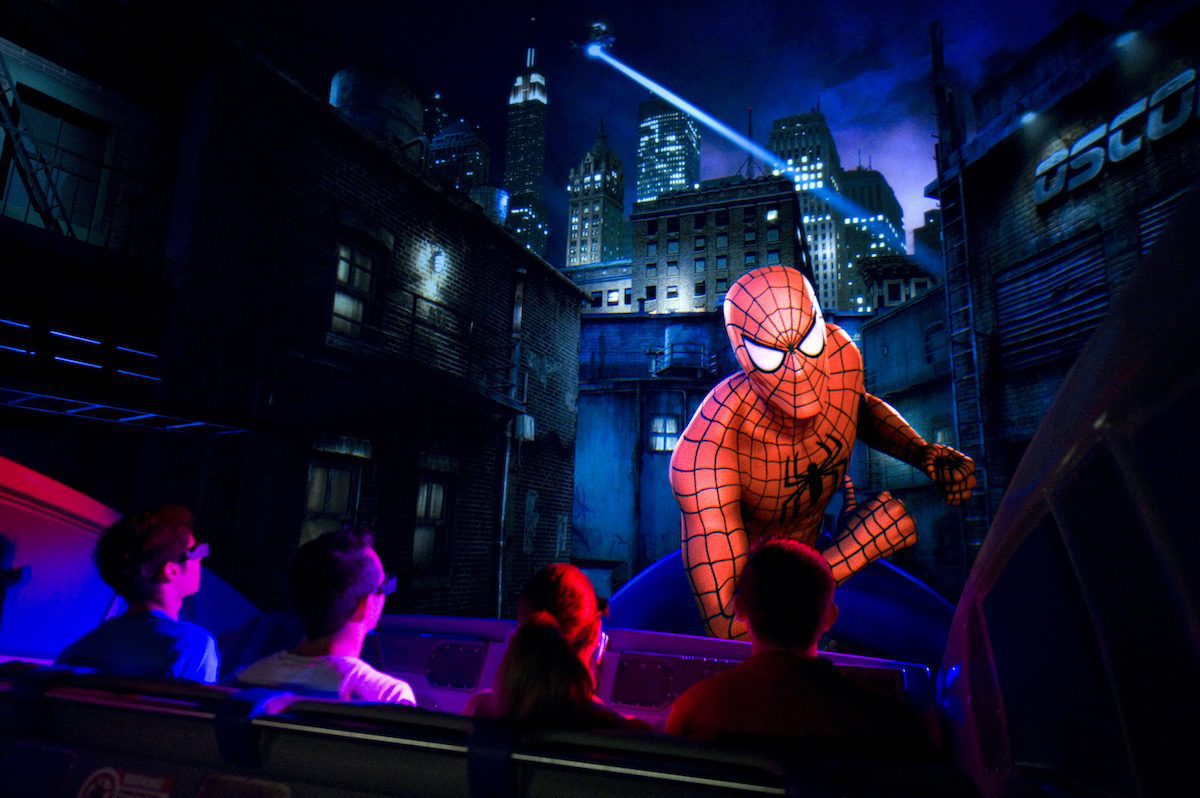
Coming from construction, it was pretty incredible for me. I was a builder when I worked at Holder—we did office towers and data centers—and getting into the entertainment world and seeing all the creativity was amazing. No hurdle would stop this team. They would just keep going. It was an awesome experience.
You’re a walk-around character for a day; who do you choose?
If I were a character, I would be a static character. There’s a fountain in The Lost Continent at Universal’s Islands of Adventure called The Mystic Fountain.

Somebody somewhere with a camera watches the crowd near the fountain and interacts with them out of the blue. It has all these little fun gags that it can do, like shoot water. I feel like I could be very irreverent and have fun with the guests but not have to perform.
What types of attractions would you like to see more of and why?
Because we build things, of course, I’d like more built environments, more rock work, more facade work, and more scenic build. The lands being created for Star Wars, Harry Potter, and all these different intellectual properties are special and allow people to experience their favorite stories on a deeper level. It’s self-serving because I built them, but I also think they’re really cool.

Was there any challenge or surprise in your career?
I think the biggest challenge was learning the show side of our business, learning that the show was paramount and that we could work around all of the show’s requirements through the construction. When you’re in construction, the structure and the building are primary, but it becomes more secondary when you’re in fabrication for a theme park—like columns will be moved to accommodate the ride layout, which was a challenge for me to fully understand.
Learning all the languages of show systems was a challenge, the AV technologies, ride and show control, and integration. You have to know the words and understand what they mean and how they relate to fully grasp the scope of a project. Also, location is a challenge. If the same project is built in Japan as opposed to Orlando or Hollywood, it’s very different. Every park has its own personality and nuances.

As far as surprises, I was pleasantly surprised at how talented people are. I’m more of a linear thinker. When you’re in a business like ours, where we have all these creative people, it’s mind-blowing how talented they are and how they think so much more broadly than I do. And it’s fun to be around.
Generally, in our work, we’re the last ones on site so we have to deal with all the situations created earlier. The building gets completed and is watertight, and then we come in and make it look like whatever it’s supposed to look like. So, we’re the ones that have to mask a lot of the mechanical systems and all the structure and make people believe that they’re in Scotland or somewhere. There are drawings, and everybody’s working off the same plan, but things happen along the way that can create these kinds of collisions at the end, so we have to mask them.
We have the best team in the business, which makes overcoming challenges routine. We’re fortunate to have many long-term employees, and we’ve been working together for quite a while, so we understand the rhythm and attitude of our clients and other team members. We’re also very fortunate and thankful that we’ve maintained relationships with long-term clients.
Can you talk about what you are working on these days?
We can never talk about it. It’s so funny; my kids are always wondering what I’m up to, and it’s not until opening day that they realize, “Oh, you guys did this?” I can’t even tell my kids unless they’re under an NDA.
We build wildlife habitats, aquariums, hospitality, and cultural centers. Currently, we are working on a themed office campus, and we are also working on a couple of zoo projects, which are always great; working with the animals is very rewarding.
You are going to your favorite theme park; which industry people (dead or alive) are you taking with you?
I would probably want to go with some of the creatives I’ve worked with and get their take on what they’re experiencing, why it’s good—or why it’s not good—and what they would do differently. Would the use of technology help? Or would more scenery help? What would make the attraction more interesting?

Photo courtesy of Disney


Photo courtesy of Universal
I would also want to go with contemporary guys I have worked with like Thierry Coup, Scott Trowbridge, and Cecil Magpuri. Or guys from when I first started, like Lee Nesler and Bob Ward.
Without a doubt, Phil Bloom. He’s an amazing creative who I learned so much about the attractions business from, and I really enjoy his commentary. He’s one I would definitely take with me on my tour of theme parks.
Writer Kendall Wolf is a long-time consultant in the themed entertainment industry. She has worked with designers, producers, and fabricators to help developers create unique and successful projects around the world. In 2017, she introduced Merlin Entertainments to a development group in Sichuan province for the first Legoland park in China. Kendall continues to consult for the developer to open more themed resorts in China.
Follow us:
More Attractions Magazine stories:
No matter where you want to go, our trusted partner MEI-Travel will handle the planning so you can focus on the memories. They offer free vacation-planning services and have nearly 20 years of experience creating memorable vacations. Visit MEI-Travel for a fee-free, no-obligation quote today.