


Disney patent could let attractions adapt to what guests want — or want to avoid
Disney is exploring technology that could make theme park attractions more personalized, from warning guests about experiences they may want to avoid to potentially changing parts of a ride based on individual preferences.
A newly published patent application from Disney Enterprises describes a system that could learn what guests enjoy — or find uncomfortable — and use those preferences to recommend attractions, provide real-time warnings and, on compatible experiences, adjust elements including sound, lighting and motion. Disney even envisions giving thrill-seekers more of certain effects, such as increased G-forces on an individual simulator, within predetermined safety limits.
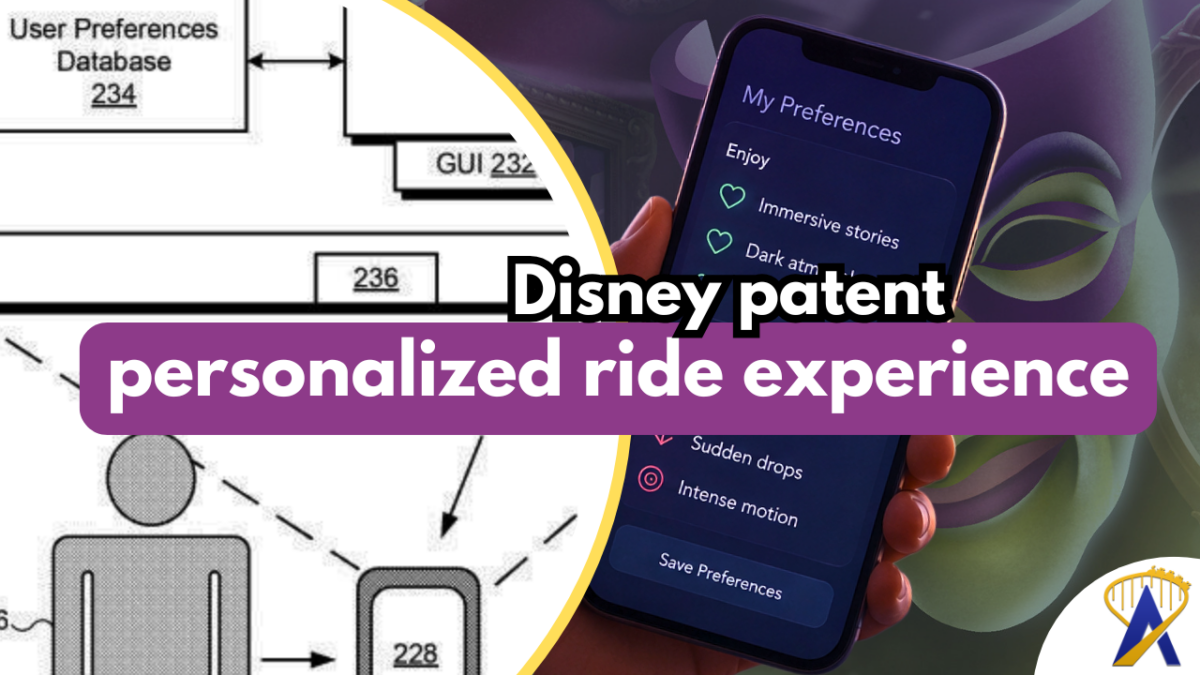
In this vision of the future, one ride experience might not fit all. The patent application, titled “Personalized Notification of Attractions Including User Preferences or Aversions,” was filed Feb. 14, 2025, and published by the U.S. Patent and Trademark Office on Aug. 20, 2026.
What Disney’s personalized attraction patent could do
To decide if an attraction is a good fit for your needs and preferences, you currently need to read through official descriptions and ride signage. Disney is exploring a more personalized approach.
Disney’s concept starts before a guest ever boards a ride. A user could identify specific characteristics they enjoy or want to avoid, with those preferences potentially stored and applied across multiple experiences. The system could then compare those preferences with detailed information supplied by an attraction and alert the guest when there is a match.
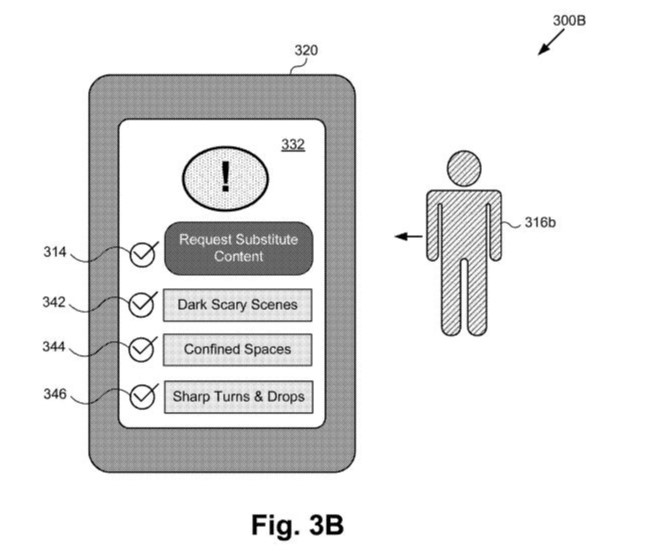
The patent goes well beyond broad labels such as “thrill ride” or “may frighten younger guests.” Disney proposes identifying individual characteristics including dark or scary scenes, flashing lights, confined spaces, sharp turns and drops, snakes and spiders, blood and gore, screams, profanity, smells, water effects, vibrations and even the volume of sounds. Physical ride characteristics could include velocity, acceleration, sudden drops or rises and a vehicle’s roll, pitch or yaw.
From patent document
Disney says a single motionless spider might warrant a 1 or 2 on a 10-point scale, while a swarm of aggressively moving spiders could rate an 8 or higher. Individual moments within an attraction could receive their own scores, instead of assigning one rating to the entire experience.
I enjoy elaborate dark rides and immersive environments, but I’m much less enthusiastic about physical thrills and startling moments. Those are very different preferences that a generic attraction warning does not necessarily capture.
This patent sounds very hopeful.
Personalized warnings could follow guests through an attraction
Disney acknowledges that the conventional solution, putting warnings on signs or making audio announcements, has limitations. Listing every possible concern would become unwieldy, while broad warnings can cause someone to skip an entire experience because of one effect they would prefer to avoid.
The proposed system could get much more specific.
From patent document
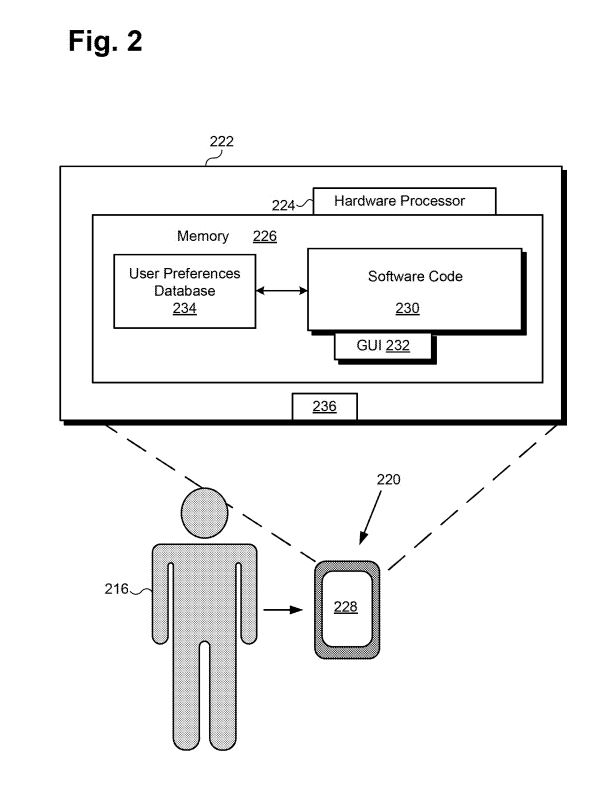
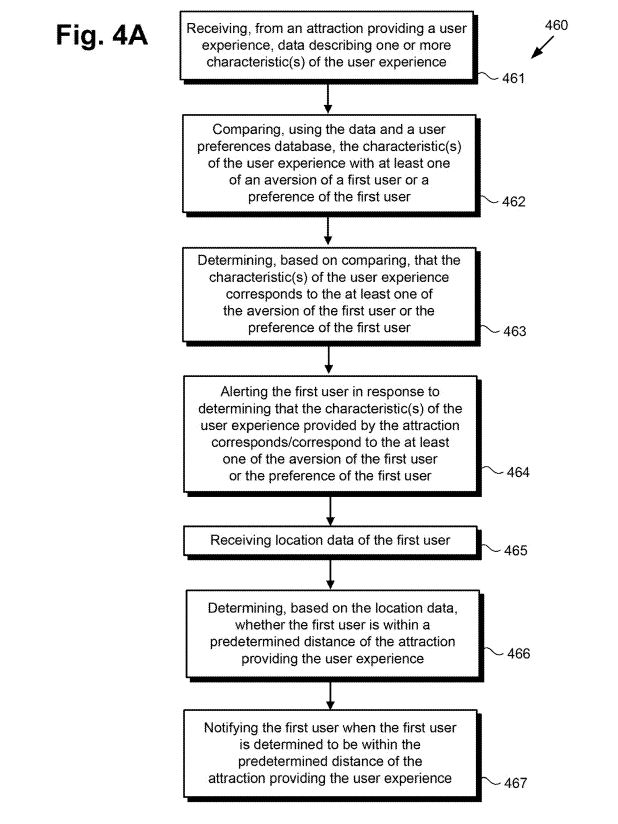
An attraction could provide information about where and when individual effects occur. A phone, smartwatch or other wearable could track the guest’s progression through the experience and synchronize that location with the attraction’s show timing. Before the guest reaches an effect they have flagged, the device could provide a visual, audio or haptic warning. This sounds like a godsend to someone like me.
Related: New Buzz Lightyear’s Space Ranger Spin review
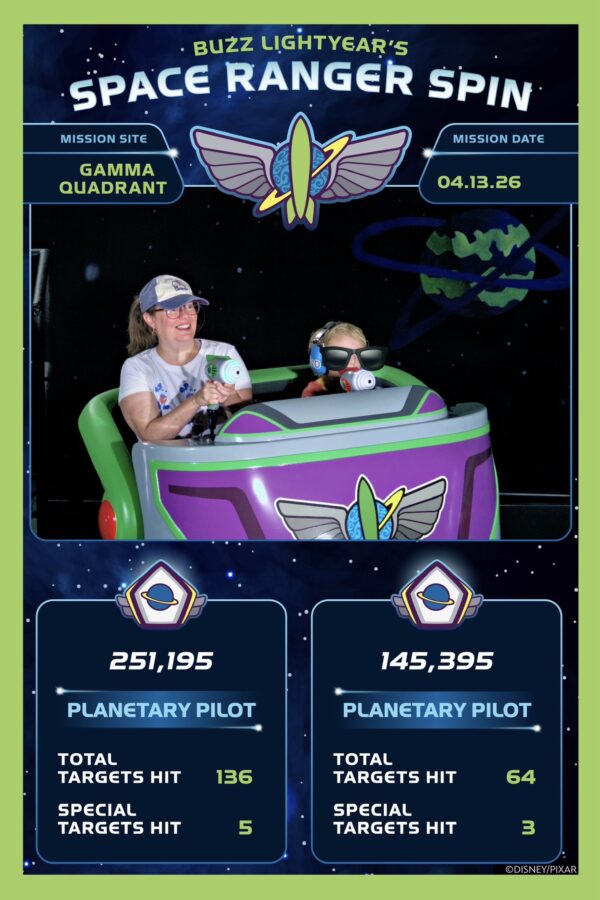
PhotoPass on-ride photo
Disney even envisions substitute visual or audio content being delivered during a portion of an attraction that contains something the guest wants to avoid. The patent is also realistic about the limits: you can substitute an image or sound, but you cannot necessarily substitute a confined space, smell or sharp physical drop.
One example in the filing describes a parent whose son has autism or other sensory needs selecting dark/scary scenes, confined spaces and sharp turns and drops as things to avoid. The system could provide substitute content for compatible effects, such as visuals or audio, while warning the family about physical elements that cannot be changed.
As part of a neurodivergent family, this is where the concept really catches my attention. Theme park experiences can combine sound, lighting, motion, physical spaces and other sensory effects in ways that are difficult to summarize with a warning at the entrance. The possibility of identifying the specific elements that matter to an individual guest, without automatically ruling out the entire attraction, provides better value and personalization.
Some attractions could actually adapt to the rider
And this is where the patent gets particularly ambitious.
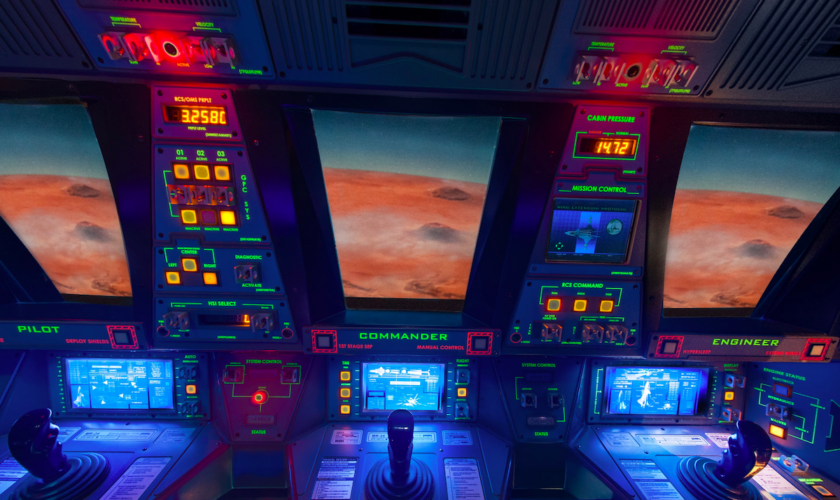
On compatible attractions, Disney isn’t limiting the concept to warnings or alternative recommendations. The system could send instructions to the attraction requesting that an effect be increased, decreased or omitted while that particular guest is experiencing it.
Courtesy of Disney
Disney uses an individually controlled flight or space simulator as an example. A guest who dislikes abrupt altitude changes could have them reduced or omitted. Someone who loves acceleration could potentially have the G-force increased, within predetermined safety limits. Loud sounds could be reduced for one guest, or bright lighting dimmed.
In other words, personalization doesn’t necessarily mean making everything less intense. Disney explicitly contemplates turning things up for guests who want more, too.
There are smaller applications that could be useful immediately. On an attraction where riders get wet, for example, Disney proposes telling a guest where to position themselves to minimize or maximize the splash.
From patent document
Future attractions like Villains Land
Disney does not connect this patent application to any attraction currently under development, and patents are never a guarantee that an idea will actually reach the parks.
Still, Villains Land at Magic Kingdom is an interesting example of where this type of personalization could be useful. Disney is developing a sophisticated, intentionally dark atmosphere for the land and has teased experiences unlike things it has done before. A system capable of distinguishing between a guest who loves scary environments but dislikes intense physical thrills — or another guest with the opposite preferences — could provide much more useful information than a single broad attraction warning.
For families like mine, the possibility of enjoying more of a theme park without having to choose between skipping an experience entirely and simply enduring the difficult parks is especially meaningful.
More Attractions Magazine stories
Follow us:
Whether you’re ready for your next Disney Destinations vacation or your first, our trusted partner Mouse Fan Travel will handle the planning so you can focus on the memories. They offer free vacation-planning services and have nearly 20 years of experience creating memorable Disney vacations. Visit Mouse Fan Travel for a fee-free, no-obligation quote today.
Can just see where somewhere where the new technology doesn’t work properly and the guest wanting to sue Disney because it didn’t. I’m sure they will have to put warnings up about that.